Financial-services security work can mean operating a bank's identity controls, testing evidence for an audit or helping a business owner decide which technology risk to accept. Those jobs need different preparation. Start with the service and responsibility you want, then choose the credential that supports it. A financial-sector employer does not turn every security role into an audit job, and an audit credential does not make its holder a regulator.
Learn the service behind the control
Choose a business process such as opening an account, authorizing a payment or supporting a trading application. Identify the systems, data and people involved, including external providers. A security finding is easier to assess when you can explain what the service must keep doing and who is affected by an interruption.
The FFIEC's IT Examination Handbook is a useful public reference for US financial-institution technology oversight. Its architecture, infrastructure and operations material connects management of technology with the risks institutions face. Read the relevant booklet for context, then ask which requirements and supervisory expectations apply to the particular employer. The handbook is not a single worldwide banking rule.
For an entry assignment, trace one access-control process through that service. Find who requests access, who approves it, how it is implemented and what evidence shows removal when the need ends. This creates a project that an engineer, an auditor and a risk owner can each examine from their own responsibility.
Enter through a role you can already perform
NIST's NICE Framework describes tasks rather than a special financial-services career ladder. Technical support, defensive analysis, systems security and assessment work can all contribute to a financial institution. Match your existing skills to a concrete vacancy instead of assuming you must obtain a senior credential before applying to the sector.
An administrator can build experience operating access and configuration controls. An analyst can investigate activity and improve logging. Someone with an accounting or audit background may be better placed to test evidence and report findings. The first move should give you reviewed work in the branch you want to develop.
Keep a dated record of responsibilities and a sanitized description of the work that you are permitted to share. Customer data, internal configurations and assurance material may be restricted. A good interview example can explain the problem, method and result without exposing the institution's systems or implying permission to distribute its records.
Choose CISA for assessment and CRISC for risk response
CISA fits work that assesses information systems and their controls. ISACA requires qualifying experience for the certification, with defined waiver routes, even though candidates can take the exam earlier. Read the current application rules before presenting an exam pass as the full designation.
Use CISA preparation on an actual assessment question. Define the requirement and scope, select evidence and explain whether it supports the conclusion. A report that repeats the control owner's assurance without testing it does not demonstrate independent assessment. The audit career branch provides a wider comparison with authorization work.
CRISC fits a different responsibility: assessing IT risk, selecting responses and reporting the remaining exposure. ISACA's current support guidance distinguishes the experience rules by exam period, so check the rule that applies to your pass date. No experience waiver replaces the required qualifying work. Choose this branch when the risk register and treatment decisions have become your job.
Keep engineering credentials close to the platform
A financial institution still needs engineers who can configure identity, networks, endpoints and cloud services correctly. A provider credential such as AWS Security Specialty can fit when those controls are on AWS. Study against the current provider objectives and apply the learning in an authorized environment.
Build a controlled change that improves a real operating weakness. For example, make a privileged-access review easier to verify or ensure a deployment identity leaves an investigation trail. Define the recovery procedure and have the operating team review it. A control is more credible when the team can maintain it after the project finishes.
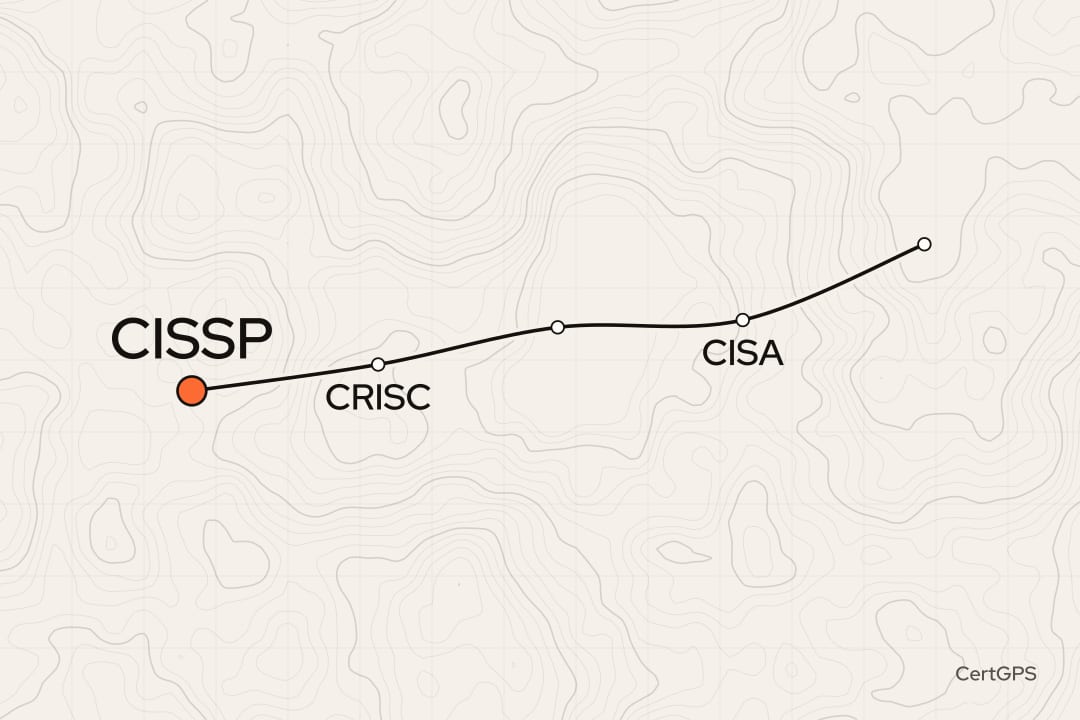
CISSP becomes useful when your work crosses architecture, identity, operations and governance. ISC2 normally requires five years of qualifying work in at least two domains, with a maximum one-year waiver. It is a breadth credential for experienced practitioners, not a substitute for learning the bank's actual systems.
Understand payment specialization without confusing the credentials
If your work handles payment-card data, the PCI Security Standards Council offers a separate body of standards and professional programs. Its PCI Professional qualification, PCIP, is a real individual credential. Read the Council's program requirements before deciding whether it fits your role.
An individual qualification and an organization's PCI DSS validation answer different questions. Ask the employer what the role does: operating controls, preparing evidence, coordinating an assessment or performing authorized assessor work. Do not assume a general security certification qualifies someone to sign an assessment report under a separate professional program.
The e-commerce security career path covers the application and payment flow side in more detail. A bank role may also involve requirements outside payment-card security. Keep the scope of the credential and the scope of the employer's obligations explicit when discussing your preparation.
Progress by owning the consequence of a finding
A more senior specialist should be able to connect a technical result with the service, the responsible owner and a feasible treatment. Work through a finding from evidence collection to remediation or documented acceptance. Explain the dependencies that affected the decision and how the team checked the result afterward.
The next responsibility may be reviewing other analysts' work, leading a control program or designing a service-wide change. Those are distinct assignments. Ask what authority comes with a proposed title and which decisions still belong to another team. Financial-sector experience is valuable when you can explain the decision process as well as the requirement.
We would enter through the branch you can already contribute to, then add one credential as the work deepens. CISA supports assessment, CRISC supports risk work, and provider study supports engineering. The technical leadership route becomes relevant when you manage the program; it should not be treated as the only successful destination in financial security.
Sources (9)
- FFIEC cybersecurity resources: US financial supervisory context, checked October 2026
- FFIEC architecture booklet announcement: architecture and operations handbook scope, checked October 2026
- NICE Framework resource center: task-based roles, checked October 2026
- ISACA CISA: audit credential, checked October 2026
- ISACA CRISC: risk credential, checked October 2026
- CRISC application guidance: date-specific experience rules, checked October 2026
- ISC2 CISSP experience: experience and maximum waiver, checked October 2026
- AWS Security Specialty: provider credential, checked October 2026
- PCI Professional qualification: PCIP program, checked October 2026