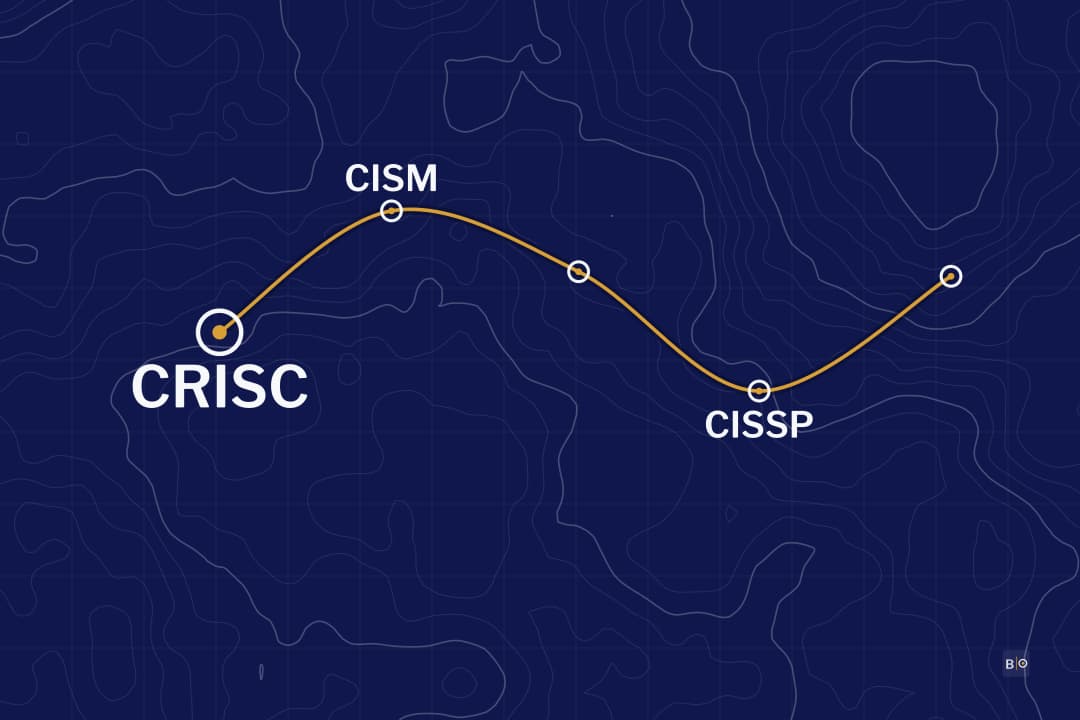
A technical specialist becomes ready for security leadership when they can help the organization decide what to fund, what to delay and which risk to accept. The chief information security officer role adds accountability for a program and its people, not simply a harder set of technical questions. Build that responsibility in bounded steps before treating an executive title as the next certification milestone.
Find out which CISO job you are aiming for
A CISO title can cover different scopes. A small company may need a leader who still investigates incidents, while a larger organization may divide security engineering, assurance and operations among separate managers. Ask who owns the budget, who can accept risk and which decisions the CISO can make without another executive's approval.
NIST's NICE Framework describes Executive Cybersecurity Leadership in terms of direction, resources and policy for cybersecurity work. Use that as a starting point for reading job descriptions. A vacancy that combines executive accountability with no authority to allocate resources deserves questions before an application, even if its title looks like a large promotion.
Write a target-role description for yourself using responsibilities rather than status: the teams you would lead, the decisions you would own and the business processes you would need to understand. It gives you a way to judge the next assignment. Managing a technical project can be useful preparation, but it does not automatically provide experience of running a security program.
Replace a tool proposal with an investment decision
Start with a problem your current team wants to solve. A technical proposal might describe an endpoint platform's features. A management proposal should describe the exposure, the existing control, the options and the people needed to operate each one. Include doing less or improving an existing service if those are credible alternatives.
Use the organization's own cost and risk methods. Do not invent an annual loss figure because a business case looks incomplete without a number. State which assumptions are supported and which need validation. If the proposed service requires another team to provide logs or maintain agents, ask that team to review the operating commitment before presenting it.
NIST's Cybersecurity Framework 2.0 gives governance an explicit place in managing cybersecurity risk. Its value here is a shared way to discuss outcomes and responsibility. It does not make the investment decision for you. Your readiness marker is being able to explain why one proposal should be funded before another and what risk remains after it is funded.
Take responsibility for a program you can measure
Before seeking the whole security function, own a program with defined scope. Vulnerability management, access governance or incident readiness can provide that experience if the assignment includes planning, resources and reporting. Agree with your sponsor what you can change and what requires escalation.
For access governance, for example, start with the joiner, mover and leaver process for an important application. Find its owner, define the review process and make exceptions visible. Report whether access decisions are completed and whether known problems are repaired. A count of accounts reviewed does not by itself show that inappropriate access was removed.
Bring failures into the review. A program that reports green because it excludes the systems it cannot reach will not teach executive judgment. Explain the missing coverage, what it means and the decision needed to improve it. This is also where you learn whether you enjoy coordinating people and decisions more than configuring the controls yourself.
Choose CISSP for breadth and CISM for management work
CISSP can help an experienced engineer connect operations with governance, architecture, identity and software security. ISC2 requires five years of qualifying work in at least two domains, with a maximum one-year waiver for an accepted degree or credential. Passing the exam early lets you apply for Associate of ISC2 status while completing the certification requirements.
CISM fits ownership of governance, risk, the security program and incident management. ISACA requires qualifying information security management experience, and substitutions share a maximum two-year total cap. Do not count general technical work and a credential waiver as separate allowances that exceed that cap. The experience application needs to reflect what you actually managed.
Candidates starting CISM study this autumn should use the materials for the outline effective November 3, 2026. The CISSP and CISM comparison explains the different emphases. We would not buy both before taking any management assignment. A reviewed budget proposal and an operating program make the learning more concrete and help establish which exam fills a gap.
Learn incident leadership before the real escalation
Incident leadership includes decisions about business interruption, communication, evidence and recovery. NIST SP 800-61 Revision 3 connects response with the organization's wider risk-management activities. Read it with the people who own operations and continuity, then run an exercise that makes those dependencies visible.
Use a scenario that crosses teams, such as compromised administrative access to a business service. Ask who can authorize isolation, who communicates with affected customers and who decides when the service can return. Keep legal and reporting obligations with the qualified people responsible for them; an exercise is a way to find missing ownership, not a substitute for legal advice.
Afterward, assign the improvements and revisit them. An executive should be able to distinguish a decision made under uncertainty from a failure to prepare a decision process at all. Being calm in the meeting is useful, but closing the preparation gaps is the part that changes the next incident.
Report the decision the executive team needs
Practise a short management update with a business sponsor. Explain what changed, which services are affected, what is being done and where a decision is required. Put the technical detail behind the recommendation so it remains available for scrutiny without forcing everyone through it first.
If risk assessment becomes your main responsibility before program management, CRISC may fit that intermediate role better. Our GRC progression guide describes that branch. Someone who prefers design reviews and engineering decisions may find the architecture route a better destination than CISO.
We would pursue the executive role after you have operated a program, managed its trade-offs and reported an uncomfortable result accurately. No certification establishes those qualities on its own. Ask a prospective employer which decisions its CISO has actually been able to make, and choose a role whose authority matches the accountability you are accepting.
Sources
- NICE Executive Cybersecurity Leadership: executive responsibilities, checked October 2026
- NIST Cybersecurity Framework: risk governance context, checked October 2026
- NIST incident response Revision 3: response as organizational risk work, checked October 2026
- ISC2 CISSP experience: five-year rule and waiver, checked October 2026
- ISACA CISM: credential and November outline change, checked October 2026
- ISACA Candidate Guide 2026: management experience and waiver cap, checked October 2026
- ISACA CRISC: risk specialization, checked October 2026