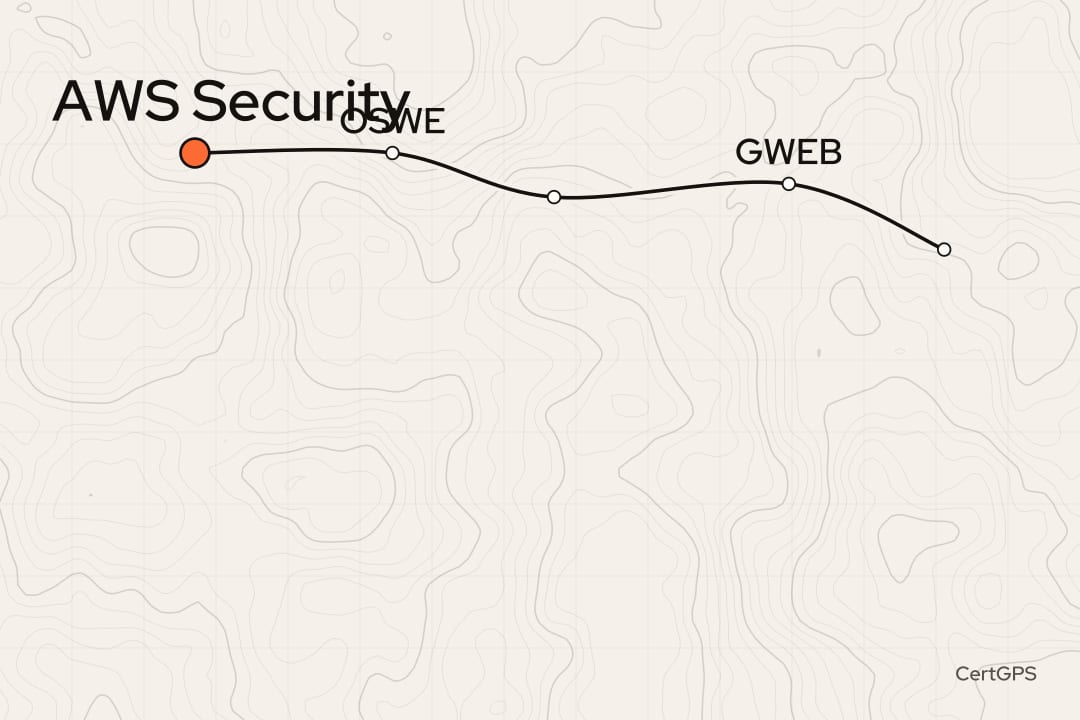
An e-commerce security problem can start in a browser, a customer account, a deployment identity or the service that handles payment data. Follow the full purchase flow before choosing a specialty. The application-testing, cloud-engineering and payment-assurance branches have different work and qualifications. A general security credential can support them, but it does not establish that a business meets every requirement attached to its checkout.
Map the purchase before testing a component
Use a test store or another environment you are authorized to examine. Trace browsing, account creation, checkout, payment processing and order fulfillment. Identify which systems receive each kind of data and which external providers participate. Record the assumptions instead of treating a payment-provider integration as a complete explanation of the flow.
Then trace administrative access. Find who can change product pages, deploy application code, export customer records and modify payment settings. Include service identities and third-party integrations. An account may have legitimate access to orders while having no business reason to change the checkout code.
The NICE Software Security Assessment and Infrastructure Support roles describe parts of this work. Use them to read vacancies carefully. A retailer hiring an application specialist and a payments provider hiring a control-assurance analyst may both advertise e-commerce security, while expecting very different daily responsibilities.
Build an application-security foundation
OWASP's Application Security Verification Standard is a useful reference for assessing application behavior. Choose requirements relevant to authentication, sessions, authorization and data handling. Explain what you tested and which part of the system the result covers. A clean scanner output does not answer every requirement in the standard.
Take a bounded issue through repair. For example, use your test application to verify that one customer cannot access another customer's order through a second endpoint. Record the evidence, the authorization decision in the code and a regression test for the fix. Keep the example in a controlled environment and within the permission you have.
You are ready for more responsibility when a developer can reproduce the problem, understand the proposed fix and verify it on the supported release. Our developer-to-AppSec route covers that move for someone already building web software.
Choose GWEB or OSWE for the work you want to deepen
GWEB is GIAC's defensive web application credential. Its objectives address application and API security for people building and protecting software. It fits an engineer who wants a structured defensive syllabus and can use the material on the product they support.
OSWE is OffSec's code-assisted application testing route. Its practical exam requires exploit scripting and reporting. It can fit a tester or developer who needs deeper analysis of source-level flaws. It is not a prerequisite for every e-commerce security role and does not replace knowing the product's operating constraints.
Choose one based on the recurring gap in your projects. If your work is implementing secure components and reviewing design choices, a defensive syllabus may be closer. If you regularly investigate complex flaws by reading code, OSWE may be the better challenge. Keep a shareable practice report beside the exam result so the distinction remains visible to an interviewer.
Learn the payment requirements with the responsible owner
PCI DSS addresses protection of payment-card account data within its defined scope. Read the PCI Security Standards Council's material with the person who owns payment compliance for the business. Establish which systems are included and which validation process applies. Do not infer that outsourcing payment processing automatically removes all merchant responsibilities.
The Council's PCI Professional qualification, PCIP, is a real individual program that may suit someone supporting this work. It is different from an organization's validation and from approval to perform assessor work under another Council program. Ask which responsibility a proposed job includes before buying the associated training.
A useful early assurance project is tracing one payment-related control to its evidence and owner. Record a gap accurately and agree how remediation will be checked. The finance security career path provides the wider audit and risk branches, while the GRC progression guide distinguishes preparing evidence from assessing it independently.
Protect the platform behind the store
A store also depends on cloud identities, deployment pipelines, data stores and logs. AWS Security Specialty can support that branch if the environment runs on AWS. Choose a provider syllabus you can apply rather than collecting cloud badges unrelated to the service.
Use the platform work to improve a recovery or access-control problem. Check whether a compromised deployment account can change the checkout, how the activity is logged and who can revoke its access. Test the recovery process on a safe environment so the operating team knows what a containment action would interrupt.
The cloud engineer path covers the broader engineering route. E-commerce specialization comes from understanding the transaction and its dependencies, not from a separate cloud configuration that applies to every retailer. Preserve that service context when explaining a technical recommendation to the business.
Progress toward product-wide responsibility
CSSLP becomes useful when you work across requirements, design, implementation, testing, release and maintenance. ISC2 requires four years of qualifying experience, with a relevant degree able to satisfy up to one year. Keep a record of the security work you perform even if your current title is developer or platform engineer.
At that stage, look across repeated findings. A recurring authorization defect may call for a shared component or a changed design-review process. An access problem may require better workload identity ownership. Choose an intervention with the product and platform teams, then test whether the next release actually benefits.
We would enter through application or platform work, learn the payment scope alongside the responsible owner and add assurance credentials only when the role requires that responsibility. A portfolio that connects a checkout risk to a repaired control shows more than a generic retail-security certificate could. The next promotion should expand the part of that service you can maintain and defend.
Sources (9)
- OWASP ASVS: application security requirements, checked October 2026
- NICE Software Security Assessment: assessment tasks, checked October 2026
- NICE Infrastructure Support: platform tasks, checked October 2026
- GIAC GWEB: defensive application credential, checked October 2026
- OffSec WEB-300: code-assisted testing credential, checked October 2026
- PCI DSS: payment account-data standard, checked October 2026
- PCI Professional qualification: individual PCIP program, checked October 2026
- AWS Security Specialty: platform security scope, checked October 2026
- ISC2 CSSLP experience: lifecycle experience, checked October 2026