A security team needs enough coverage for the work the organization has agreed to perform. A list of job titles does not establish that coverage, and a certification requirement cannot resolve unclear responsibilities. Begin by describing the services, decisions and operating tasks that need owners. Then decide which work belongs inside the organization and what evidence would show that a candidate can do it.
Make the existing work visible
Talk to the teams already handling alerts, access changes, application reviews and supplier questions. Record where requests arrive, who responds and what happens when the usual person is unavailable. Include work done outside the security department. A system administrator may own an important control even when their role has no security title.
Separate recurring operations from projects and advisory work. An engineer implementing a new identity service needs time to design and test it. Someone responding to a queue has an ongoing service obligation. Assigning both to the same person may be feasible, but the plan should explain how priorities change when an incident interrupts the project.
Avoid inventing a staffing ratio. The appropriate coverage depends on service scope, operating hours, technology, risk and which responsibilities other teams retain. A small internal team with well-defined supplier support can have a different workload from an organization that operates the same technology itself. Describe those conditions before presenting a headcount request.
Use NICE to describe tasks and skills
NIST's NICE Workforce Framework supplies a common vocabulary for cybersecurity work through tasks, knowledge and skills. Use it to make a hiring discussion more precise. A title such as security engineer can hide very different responsibilities; a description of the actual work gives candidates and interviewers something clearer to assess.
Choose the relevant work descriptions and adapt them to your environment. For an identity role, specify whether the person will administer access, build integrations, investigate authentication issues or advise owners on governance. Those assignments share some knowledge but require different evidence. Keep the role within a scope a person can reasonably perform.
Use the same task descriptions to examine the current team's development needs. A missing skill does not always require a new hire. It may call for a training assignment, help from another team or a supplier whose service has clear acceptance conditions. The decision should follow the work rather than a preference for a particular staffing model.
Decide which responsibilities must stay with an owner
An external service can perform monitoring or testing, but the organization still needs someone able to understand the results and decide what happens next. Identify who can approve a change, accept a finding and coordinate with the business service owner. A contract should not be mistaken for a complete operating process.
NIST's Cybersecurity Framework 2.0 emphasizes roles, responsibilities and authorities as part of governance. Use that structure when discussing the relationship between security, IT operations and business management. Name the decision owner where two teams contribute to the same control. An escalation procedure should explain what happens when those teams disagree.
For shared identity infrastructure, the security team might define the control expectation while platform administrators implement it and application owners approve access. Test that arrangement with a request and an exception. If people cannot explain who makes the decision, revise the responsibility model before hiring another specialist into the same confusion.
Ask for evidence that matches the assignment
A work sample should resemble a task the role will perform. An incident-response candidate could analyze a sanitized event sequence and explain what evidence to seek next. An access administrator could diagnose a deliberately limited authorization problem. A manager could review a proposed control change and identify the missing owner or dependency.
Keep exercises bounded and respectful of candidates' time. Explain what information is available and how the work will be assessed. Do not ask for an employer's confidential artifacts or a free production deliverable. A discussion of a fictional or safely prepared case can establish reasoning without requiring the candidate to disclose somebody else's information.
Evaluate how a person handles uncertainty as well as whether they recognize a tool. Ask which conclusion the evidence supports and what they would check before acting. Someone who can identify a limit in the data may be more useful on the assignment than someone who supplies a confident answer to every question.
Use certifications as supporting evidence
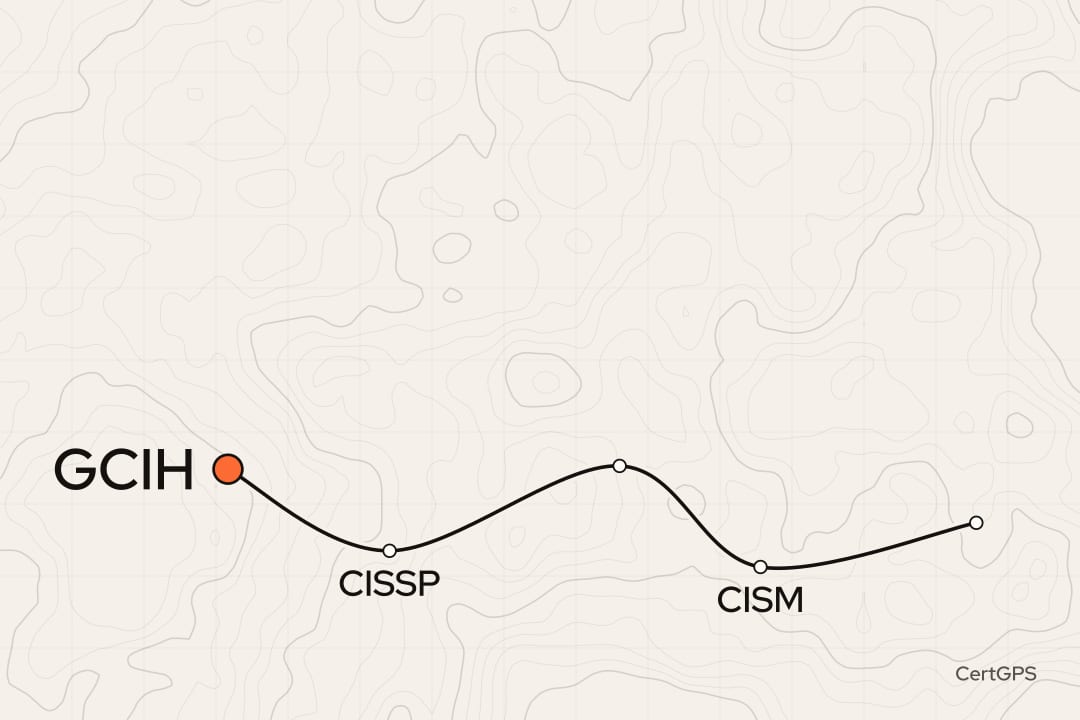
GCIH can be relevant to incident handling work. SC-300 is relevant to identity administration in Microsoft Entra environments. The published objectives help explain why each credential fits a role; neither should be demanded simply because it appears on another employer's advertisement.
For broader responsibilities, CISSP covers several security domains and CISM focuses on security management. Check the experience requirements and distinguish a certified holder from someone who has passed an exam while completing the remaining requirements. An entry role should not be described as entry level while its mandatory credential assumes substantial experience unless the organization has a specific reason it can explain.
Where a contract names a credential, confirm the actual requirement with the responsible owner. Otherwise, state what the credential is meant to demonstrate and which other evidence you will accept. Our security leadership guide covers the management choices, and the SOC progression guide covers analyst development.
Give a new hire a service they can learn and improve
Plan access, documentation and support before the person starts. Identify which decisions they can make independently and which need review. A new hire should know where to find the procedure, how to ask for help and who will review their first pieces of work. Hiring someone does not remove the need to maintain an operating model.
Use early assignments to establish the current skill level and agree what development is useful. For example, ask an analyst to explain a completed investigation and improve the evidence notes with a reviewer. Record the improvement in the team's procedure so the next person benefits from it as well.
We would revisit the coverage plan when responsibilities or services change. Compare planned work with interruptions and outstanding requests before assuming the answer is another certification or another hire. A team becomes easier to sustain when its work, decision rights and development needs are visible to the people responsible for funding it.
Sources (6)
- NIST NICE Framework Resource Center: tasks, knowledge and skills for describing cybersecurity work, checked October 2026
- NIST Cybersecurity Framework 2.0: governance, roles and responsibility, checked October 2026
- GIAC GCIH: incident handling scope, checked October 2026
- ISC2 CISSP outline: security breadth and certification requirements, checked October 2026
- ISACA CISM outline: security management scope, checked October 2026
- Microsoft Identity and Access Administrator: Entra identity administration credential, checked October 2026