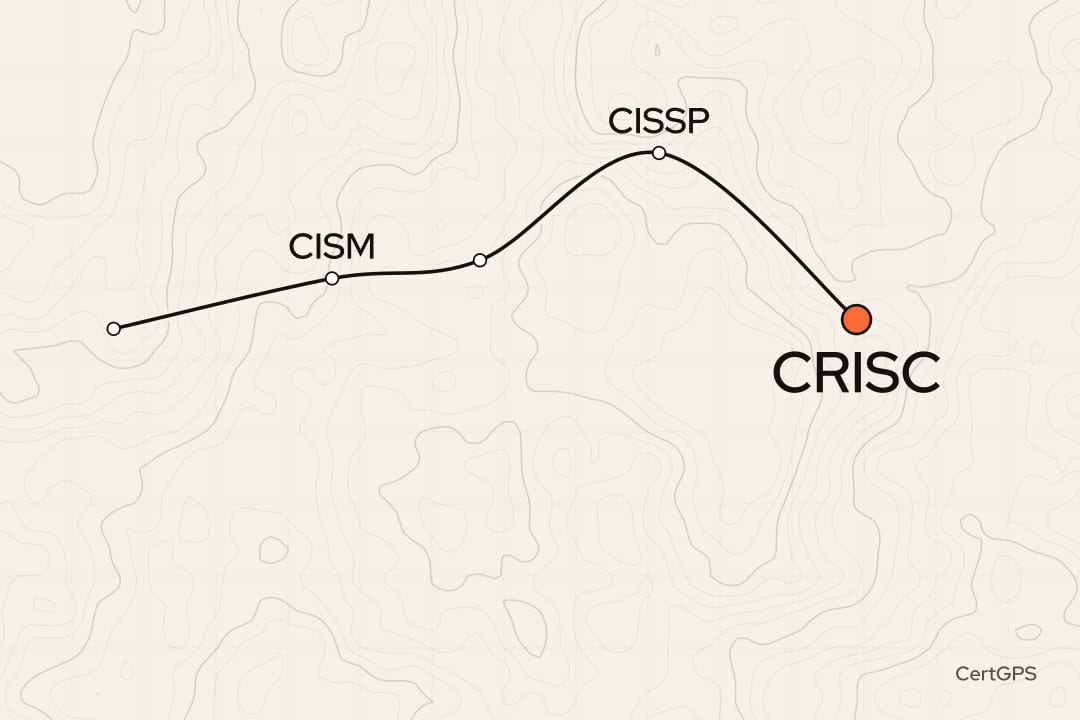
The useful leadership credential depends on which decisions belong to you. Running a security program, advising on a system design and governing an enterprise IT portfolio require different evidence. CISM, CISSP, CRISC and CGEIT cover parts of that work, with different experience rules. Choose the responsibilities you need to perform before choosing letters for your next title.
Distinguish a team lead from a program owner
A team lead can be accountable for the quality of an investigation queue or an engineering service without owning the organization's security program. A program owner must also arrange policy, resources, risk reporting and coordination across functions. Either can be a leadership role. The distinction matters because a management syllabus may answer questions the first person has not yet been asked to decide.
NIST's Cybersecurity Framework 2.0 makes governance an explicit part of managing cybersecurity risk. It connects security outcomes with organizational context and responsibility. Use that framing to describe your remit: which services you own, whose approval you need and which decisions you can make. A title such as security manager is less precise than that account of the work.
If your remit is mostly technical direction, identify the broader decisions you want to learn next. That could mean participating in a risk assessment, helping define a service's operating expectations or reviewing an investment proposal. Those assignments provide context for management study and evidence you can discuss without pretending that an exam has already made you a program owner.
CISM fits managing the security program
CISM covers information security governance, risk management, the security program and incident management. ISACA aims it at professionals who manage and oversee that work. It is a sensible choice when you need to connect security activity with policy, priorities and the resources required to deliver the program.
Read the experience requirements before deciding when to apply. Passing the exam and obtaining the certification are separate steps. A technical specialist can study the material while gaining relevant management responsibility, but should not describe a passed exam as a credential they have not yet earned. The CISM study guide covers the application and the November 2026 outline change.
For preparation, take a program you are allowed to review and identify its objectives, owners and unresolved dependencies. Explain how priorities are set and how management knows that work is progressing. If those questions are unfamiliar, discuss them with a program owner before treating practice-question scores as the only readiness signal.
CISSP adds breadth across security responsibilities
CISSP spans security and risk management, asset security, architecture, communications and networks, identity, assessment, operations and software development security. ISC2's outline makes it relevant to experienced practitioners as well as managers. It can help someone whose decisions cross several technical and organizational boundaries.
That breadth is useful when you need to question a design without being the specialist for every component. A security architect may need to understand what an identity change means for operations and testing. A program manager may need to judge whether a proposed control has an owner able to maintain it. Neither task is well served by treating CISSP as only a management exam or only a technical exam.
Choose it when the experience rule and breadth fit your work. If you already hold CISSP and have moved into program management, compare CISM's objectives with your actual learning gaps before buying another course. The CISSP and CISM comparison covers overlap and sequencing. There is no need to earn both to demonstrate that you lead a team effectively.
CRISC and CGEIT serve more specific remits
CRISC focuses on IT risk governance, assessment, response and reporting, alongside the technology and security context. It fits someone who must help owners understand an exposure and choose a response. For a risk lead working across business services, that scope may be more relevant than managing the entire security program.
CGEIT covers governance of enterprise IT, resources, benefits realization and risk optimization. It is aimed beyond a security-only remit. Choose it when your work involves the wider technology portfolio and whether investments deliver the outcomes the enterprise expected. A security manager reporting to a board does not automatically have that responsibility.
For either route, map your existing assignments against the issuer's requirements. Advisory work can be relevant, but the certification body decides whether it qualifies. Keep a record of the decisions you supported and the people able to verify your contribution. Do not assume another credential automatically removes an experience requirement; use the current application rules.
Demonstrate leadership through a decision record
A useful work sample describes a decision, the options considered and the result. For an identity modernization project, that might include which users and services were in scope, what caused the access problem and why the selected response was feasible. Show how you involved the application owner and how the change was tested. Remove confidential information and obtain permission before sharing workplace material.
Include an account of a limitation or changed assumption. Leadership involves revising plans when the evidence changes, not merely presenting a successful project. Explain what you would investigate differently next time and who was responsible for the remaining risk. A hiring discussion can then examine judgment as well as terminology.
The security budget guide and board communication guide cover two recurring assignments. Use them as practice prompts alongside your chosen syllabus. They are not substitutes for your organization's decision rights or financial procedures.
Buy the credential that closes a current gap
We would choose CISM for program accountability, CISSP for breadth across security domains, CRISC for IT risk decisions and CGEIT for wider enterprise IT governance. A professional whose work already spans those responsibilities may reasonably choose a different order. The issuer's scope and your experience should explain the decision.
Before paying, identify what you expect the course or exam preparation to change in your work. Ask a manager or trusted peer to assess that outcome afterwards. If the only answer is a longer list of credentials, postpone the purchase and seek an assignment that gives the learning a purpose. Leadership evidence should make clear what you can decide, deliver and explain to the people relying on you.
Sources (6)
- NIST Cybersecurity Framework 2.0: governance and organizational responsibilities, checked October 2026
- ISACA CISM outline: security management scope, checked October 2026
- ISACA CISM certification: credential requirements and November 2026 outline change, checked October 2026
- ISC2 CISSP outline: security domains and experience-based credential, checked October 2026
- ISACA CRISC outline: IT risk scope, checked October 2026
- ISACA CGEIT outline: enterprise IT governance scope, checked October 2026