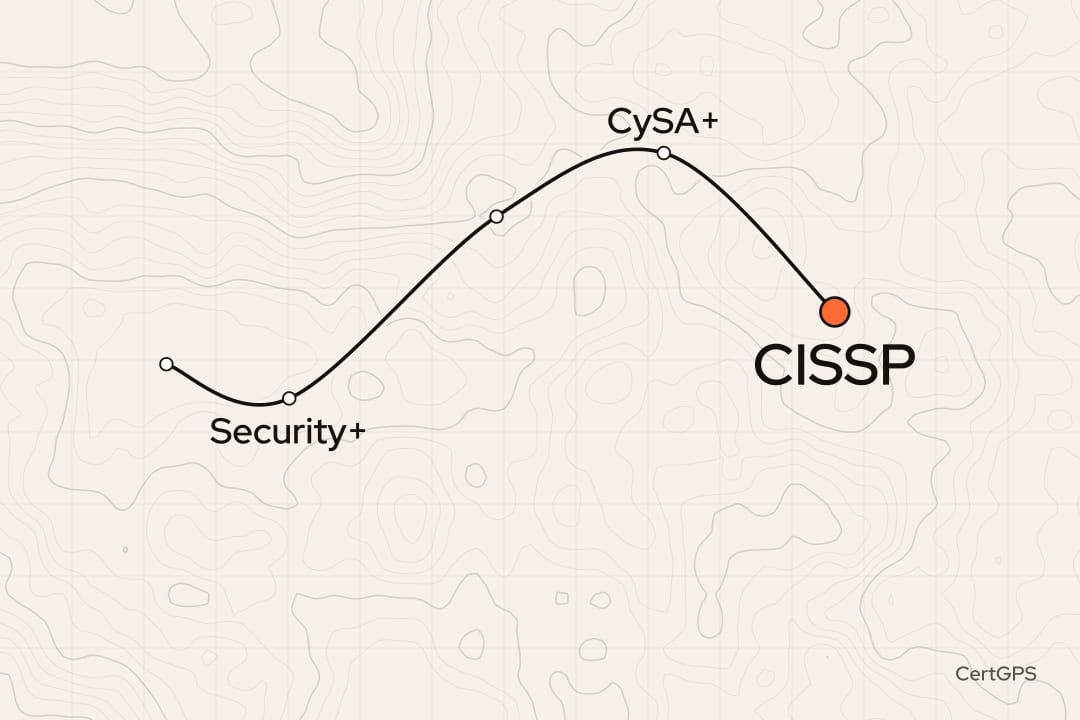
A second certification is useful when it changes what you can do or satisfies a requirement you can name. It is less useful when it repeats a syllabus you already know while adding another renewal obligation. Start with a target responsibility, compare the exam outlines and check experience rules before buying a bundle. The number of badges is not a published measure of professional competence.
Write the reason for the next credential
Give the proposed exam a specific purpose. You might need a credential named in a vacancy, a structured introduction to a field or an assessment that requires work your current exam never tested. Those are different reasons, and each leads to a different way of judging the result.
If the reason is a job requirement, keep the wording of the requirement and confirm whether alternatives are accepted. If it is learning, identify the tasks you cannot yet perform. Use the NICE Workforce Framework to translate a broad job title into work you can practise. A course can be useful even when sitting the associated exam is unnecessary.
Then write the alternative use of the same time and money. It might be a project, a platform lab or gaining responsibility at work. This comparison is an editorial decision method, not an earnings forecast. A credential should win against a real alternative rather than an empty assumption that more certification always helps.
Compare the outlines at the task level
Put the current exam objectives beside each other and mark the new material. Security+ and CySA+ share security concepts, while CySA+ focuses more directly on analysis, vulnerability management and response. Decide whether that shift corresponds to the work you intend to take on.
Do not confuse a familiar topic name with identical depth. An exam may ask for recognition of a concept while another requires configuration, investigation or a practical demonstration. Read the assessment format and any official sample material. The useful question is what you will have to do differently during preparation.
Create a small exercise for the new material. For an analyst route, produce an investigation with evidence and a justified next action. For cloud security, build a deployment with identity boundaries and logs. If the proposed second credential adds no new work you can describe, postpone it until the requirement becomes clearer.
Separate the exam from the full qualification
CISSP and CISM have professional experience rules. Passing either exam is not the same as completing the certification process. Check the application requirements before treating a study sequence as a sequence of credentials you will immediately hold.
ISC2 allows an approved credential or eligible degree to satisfy a limited part of the CISSP experience requirement. It does not let a candidate stack several credentials into several waived years. A plan to buy introductory exams solely to shorten the experience period should be checked against that limit before any purchase.
Similarly, a full active CISSP can satisfy CCSP's experience requirement under ISC2's current rules. That does not make an Associate of ISC2 equivalent to a CISSP or supply evidence of every cloud skill. Keep eligibility, experience substitution and practical readiness as separate questions in the plan.
Calculate maintenance before you add another issuer
Read the renewal policy for every credential you intend to hold. Record cycle dates, qualifying education categories, fees and evidence requirements. Do not assume that a learning activity accepted by one issuer is automatically accepted by another. Relevance and category limits can change the amount you can claim.
ISC2's member policies set continuing education requirements for its credentials and a maintenance fee structure for members with multiple certifications. That can reduce duplicate administration within that issuer, but it does not eliminate the need to satisfy the applicable requirements. Review the policy for the exact credentials involved.
CompTIA distinguishes outside certifications that earn full renewal credit from those earning partial credit. For Security+, those appear on separate lists. Check the correct version and list before planning a renewal through another exam. A route that earns education credit may still have a renewal fee; do not describe credit and a fee waiver as the same thing.
Put credentials in an order that matches the work
An analyst who needs fundamentals can begin with a foundation, move into investigation and consider broader credentials as experience grows. A developer moving into software assurance may have a different sequence entirely. Neither route needs every popular certification between its starting point and its target role.
For an experienced cloud practitioner, CCSP can complement a broader credential if cloud responsibility is expanding. For a practitioner moving into program management, CISM may be the more relevant addition. The pair should be justified by the responsibilities, not by the fact that both appear on a certification roadmap.
Keep only the next decision committed. Record later possibilities as conditional: take this if the role needs platform depth, or that if management responsibility becomes part of the job. Buying a long sequence in advance can leave you preparing for an outdated version or for a career direction you no longer want.
Review the plan using evidence from your own work
After completing a credential, ask what changed. Did you implement a control you could not previously explain, qualify for an explicit application requirement or gain confidence in a task that a reviewer can assess? Keep the answer specific. A badge count cannot show which of those outcomes occurred.
Remove a future exam from the plan if it no longer has a clear purpose. That decision does not erase the learning already gained. Use the renewal strategy to decide what to maintain, and the certification cost analysis to budget the next purchase.
Our preference is a small set of credentials with distinct purposes and evidence behind each one. When another exam mainly repeats what you already know, put the time into the missing work instead. Reconsider the credential when a real requirement or a new responsibility gives it a job to do.
Sources (10)
-
NICE Framework: planning by tasks, checked October 2026
-
CompTIA Security+: foundation exam scope, checked October 2026
-
CompTIA CySA+: analyst exam scope, checked October 2026
-
ISC2 CISSP experience: nonstacking experience waiver, checked October 2026
-
ISC2 CCSP: cloud credential and CISSP waiver, checked October 2026
-
ISACA CISM: management credential, checked October 2026
-
ISC2 member policies: maintenance obligations, checked October 2026
-
CompTIA Security+ full-credit renewal: outside certification credit, checked October 2026
-
ISC2 CCSP experience requirements: active CISSP experience substitution, checked October 2026
-
CompTIA Security+ partial-credit renewal: separate partial-credit list, checked October 2026