Ask what certification a gaming security job wants and the honest answer starts with another question: which gaming? Video game security has no industry credential and runs on skills, reverse engineering above all. Regulated online gambling has technical standards, mandatory independent security assessments and a regulator watching, which makes audit credentials count. Neither industry has a certification of its own for security people.
Two industries under one word
A studio or platform that makes and runs video games worries about cheating, account theft, payment fraud, attacks that take servers offline and, if children play, privacy law. The regulators it deals with are consumer protection and privacy agencies, such as the US Federal Trade Commission.
An iGaming operator runs online casino games or sports betting for real money. It worries about all of the above, plus the integrity of the game outcome and the money flows, and it answers to a gaming regulator that licenses it and can inspect its systems. The security teams look different as a result, and so do the CVs they hire.
Video games: cheats, accounts and children's data
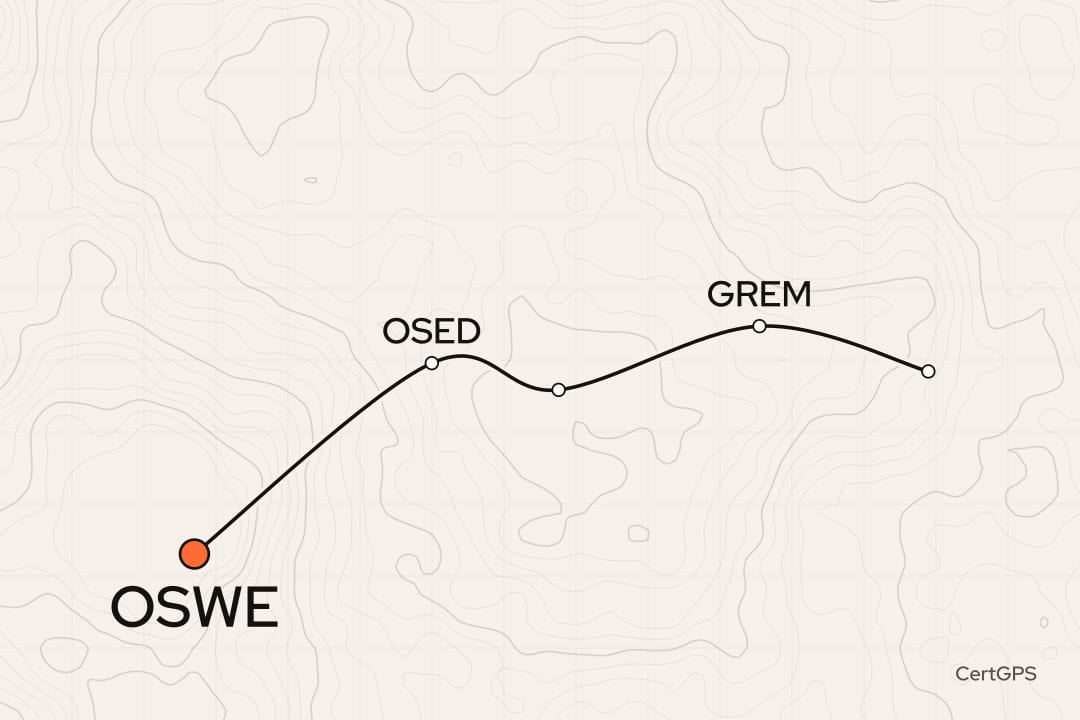
Anti-cheat is the work most specific to games. Cheats read and patch game memory or inject code into the game process, and some anti-cheat now runs in the operating system kernel to catch them. Riot Games' support page describes its Vanguard system as a client that runs while the games are active along with a kernel-mode driver, and says it's usually an on-boot application. Building or attacking that kind of system means Windows internals, reverse engineering and exploit development. The certifications that test those skills directly are GREM, GIAC's exam for taking apart malicious Windows code, and OSED, OffSec's practical exam in reverse engineering and memory corruption exploits. A cheat is not malware, but the analysis is similar.
The rest of a studio's security work, account takeover and payment fraud among it, looks like any consumer platform's. Studios that take card payments directly fall under PCI DSS; our PCI DSS guide explains when that applies. Game backends and storefronts are web applications and APIs, so OSWE and OSCP fit the testers who look after them.
Children's privacy reaches studio security teams through COPPA. The FTC amended its Children's Online Privacy Protection Act (COPPA) Rule on April 22, 2025. Its compliance guidance now tells operators collecting data from children under 13 that they "need to have a written information security program" with safeguards suited to the sensitivity of the data and the size of the business, and that is security work whoever ends up owning it.
iGaming: tested systems and annual assessments
Regulated gambling sits on published technical standards. Gaming Laboratories International (GLI), a testing laboratory, publishes GLI-19 for interactive gaming systems (now version 3.0) and GLI-33 for event wagering (version 1.1). It also publishes a set of security standards: GLI-GSF-1, a Gaming Information Security controls audit; GLI-GSF-2, a Gaming Technical Security assessment; and GLI-GSF-5, an online variant of the controls audit.
Regulators then require assessments against them. New Jersey's internet gaming rules, N.J.A.C. 13:69O-1.2(q), require each casino licensee offering internet gaming to have an annual system integrity and security assessment by an independent professional the licensee selects, subject to approval by the Division of Gaming Enforcement. The report has to state the scope, who did the assessment and for which company, the date, findings, recommended corrective action and the licensee's response.
That creates three kinds of job: security staff at operators who prepare for the assessment, assessors at test labs and consultancies who perform it, and penetration testers on both sides. The assessor roles look like IT audit, so CISA is the natural credential, with CISSP once you have five years of experience. Testers bring the offensive certifications, OSCP or GIAC's GPEN. Payments run through everything, which makes PCI knowledge useful here too.
A route into anti-cheat work
No certification covers anti-cheat, so the route is mostly self-directed. Learn C and C++ well enough to read decompiled code, then Windows internals: processes, memory, handles, drivers and how the kernel enforces boundaries. Get comfortable with a disassembler and a debugger. OSED's exam limits you to IDA Free and WinDbg, which makes its preparation a reasonable structured course in exactly these tools.
Practice on targets you're allowed to touch. Open-source games, deliberately vulnerable crackme programs and your own small game client are fair game. A commercial game usually isn't, unless its publisher runs a bug bounty program that covers the client and you follow its rules. Read the terms before you attach a debugger to anything you didn't write. Then publish: a clear write-up of how a protection works and how you'd break it is the strongest portfolio piece you can bring.
What to put on your CV
- Anti-cheat or game client security: GREM or OSED, plus public reverse engineering work. Where a studio runs a bug bounty program, a report against its game client is direct evidence.
- Game backend and platform security: OSWE or OSCP for testing roles; a cloud certification and CSSLP for engineers who design the services.
- Trust and safety, fraud and account security: identity and fraud experience counts for more than any certification here. Our IAM certification path covers the identity side.
- iGaming compliance and assessment: CISA first, then CISSP or CISM, plus working knowledge of GLI-19, the GSF series and the rules of each state you cover.
Our view
For video games, put your money into one hard practical certification, then into a portfolio. A GREM or OSED pass alongside a write-up of how you analyzed a cheat or a game client's protection says more to an anti-cheat team than any general certificate. For iGaming, the path is less exciting and more predictable: audit credentials, the GLI standards and the state rules, because what you're hired for is helping an operator pass an assessment that, in New Jersey's case, the law requires every year.
Sources (14)
- Riot Games: What is Vanguard?: client and kernel-mode driver, on-boot operation, checked October 2026
- FTC: 16 CFR Part 312, COPPA final rule amendments: April 22, 2025 Federal Register publication, checked October 2026
- FTC: COPPA six-step compliance plan: written information security program requirement, checked October 2026
- GLI Standards: GLI-19 v3.0, GLI-33 v1.1, GLI-GSF-1, GSF-2 and GSF-5, checked October 2026
- New Jersey Division of Gaming Enforcement: N.J.A.C. 13:69O (PDF): annual system integrity and security assessment and report contents, checked October 2026
- GIAC: GREM: scope, checked October 2026
- OffSec EXP-301: OSED scope, checked October 2026
- OffSec WEB-300: OSWE scope, checked October 2026
- OffSec PEN-200: OSCP scope, checked October 2026
- GIAC: GPEN: scope, checked October 2026
- ISACA: CISA certification: scope, checked October 2026
- ISC2: CISSP: five-year experience requirement, checked October 2026
- ISC2: CSSLP: scope, checked October 2026
- ISACA: CISM certification: scope, checked October 2026