A security program needs an agreed purpose, people with authority to act and a way to establish whether the work is happening. A control library or a collection of tools supplies only part of that. Start with the services the organization depends on and the responsibilities it is prepared to fund. Choose training around the work you need to organize, rather than assuming a certification supplies a finished program.
Establish the scope and who can make decisions
Write down which part of the organization the program covers. Identify the business services, technology environments and external dependencies that matter to that scope. Be clear about acquisitions, subsidiaries or customer systems that are outside it. A program statement should let an owner understand what they are accepting responsibility for.
NIST's Cybersecurity Framework 2.0 describes outcomes for managing cybersecurity risk and supports current and target organizational profiles. Its governance function connects those outcomes with organizational context, responsibilities and oversight. Use the framework to ask what the organization needs to achieve. It does not require every organization to implement the same controls in the same order.
Agree who can approve policy, allocate resources and accept unresolved risk. Include the people who operate business services, not only the security team. A program owner can coordinate and advise without owning every system. When decision rights are unclear, resolving that problem is a useful early deliverable; buying a reporting platform will not resolve it by itself.
Find the controls that already exist
Review what people actually do before writing a new set of procedures. Talk to operations, application owners and the teams handling joiners and leavers. Inspect a sample of the evidence they can provide. The point is to establish the current practice and its limitations, not to judge the program solely from whether a document has been signed.
For an access management example, follow a request from its origin to approval, provisioning and eventual removal. Identify where the process depends on an informal conversation or an unmonitored feed. Ask the owner how exceptions are handled. That gives you a more useful starting point than a general statement that the organization has an access policy.
Use the findings to describe a current profile and a target that the relevant owners can support. Separate missing controls from controls that exist but cannot be evidenced. They may need different responses. A recordkeeping improvement can make existing work visible; it cannot be assumed to correct an underlying technical weakness.
Turn the target into deliverable work
Choose an initial set of changes that the organization can operate after deployment. Give each an owner, a scope and an acceptance check. Explain the dependencies before agreeing a delivery date. If a control depends on an application integration, include the application team's work in the plan rather than treating it as somebody else's detail.
A useful first change might be establishing a repeatable access review for a defined service. Agree who receives the review, which identities it covers and how removals are confirmed. Test the process with the actual owner. Expand the approach only after finding out where the first version fails or creates work nobody can sustain.
The security budget guide covers comparing resource needs. Keep continuing operating work visible alongside implementation. The team should know who will investigate a failed feed, update the procedure and support an owner who cannot complete the review. A project is not finished merely because the technology has been installed.
Build evidence into the routine
Decide what records will demonstrate that the process works and where they will be retained. For a review, that could include the population examined, the decisions made and evidence of completed changes. Apply the organization's information-handling rules to those records. Avoid collecting sensitive data simply because a reporting tool makes it convenient.
NIST's SP 800-55 volumes cover selecting measures and developing a measurement program. Use that guidance to choose information that supports an actual management decision. A measure should have an owner and a clear definition. If a result changes because collection improved, explain that before claiming the control became more effective.
Schedule a review of the program's assumptions as services and responsibilities change. A new application or a different supplier can change the process you thought you had established. Our security metrics guide covers definitions and data quality, while the board communication guide addresses reporting decisions to directors.
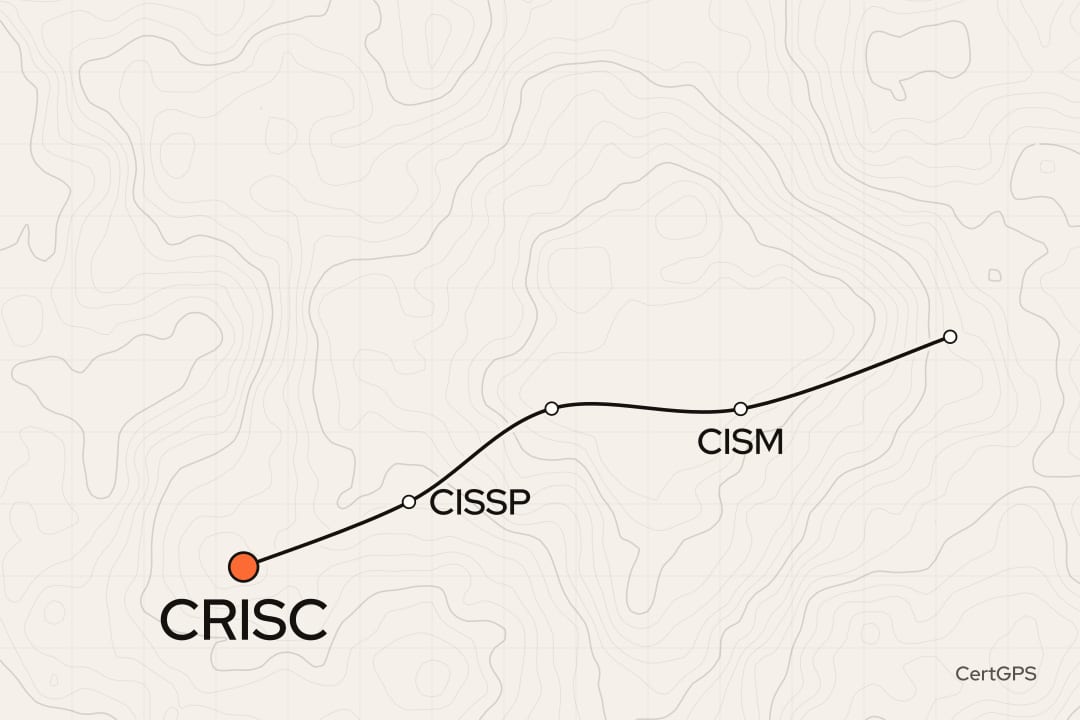
CISM, CISSP and CRISC support different parts of the job
CISM is relevant to someone accountable for governance, security risk, the security program and incident management. ISACA's outline can serve as a learning structure for understanding those responsibilities. Read its experience rules before treating the certification as an immediate qualification for a first security role.
CISSP provides breadth across security domains, including architecture, identity, operations and software development security. That scope can help a program owner ask better questions across technical teams. It does not establish expertise in every platform the program depends on, so retain the specialists who can assess individual designs and operating conditions.
CRISC is relevant when the main assignment is IT risk assessment, response and reporting. It can help connect the program's proposed changes with the exposures business owners need to decide about. Choose the credential that fits your current responsibility; completing all three is not a prerequisite for establishing a useful control process.
Judge the program by whether it can be operated
We would review a new program by following a real request or exception through it. Can the people involved identify the owner, perform the required steps and produce evidence somebody else can understand? Do they know when to escalate and who can approve the response? A documented process that fails those checks needs more operational work.
Start with a bounded scope that management has agreed to support, then make progress and gaps visible. Keep the program's records usable by the people who will inherit the work. A certification can inform the decisions, but the program becomes credible through responsibilities that are clear and controls whose operation can be checked.
Sources (6)
- NIST Cybersecurity Framework 2.0: outcomes, governance and current/target profiles, checked October 2026
- NIST SP 800-55 Volume 1: selection of security measures, checked October 2026
- NIST SP 800-55 Volume 2: measurement program guidance, checked October 2026
- ISACA CISM outline: management scope, checked October 2026
- ISC2 CISSP outline: security domain breadth, checked October 2026
- ISACA CRISC outline: IT risk assessment and response, checked October 2026