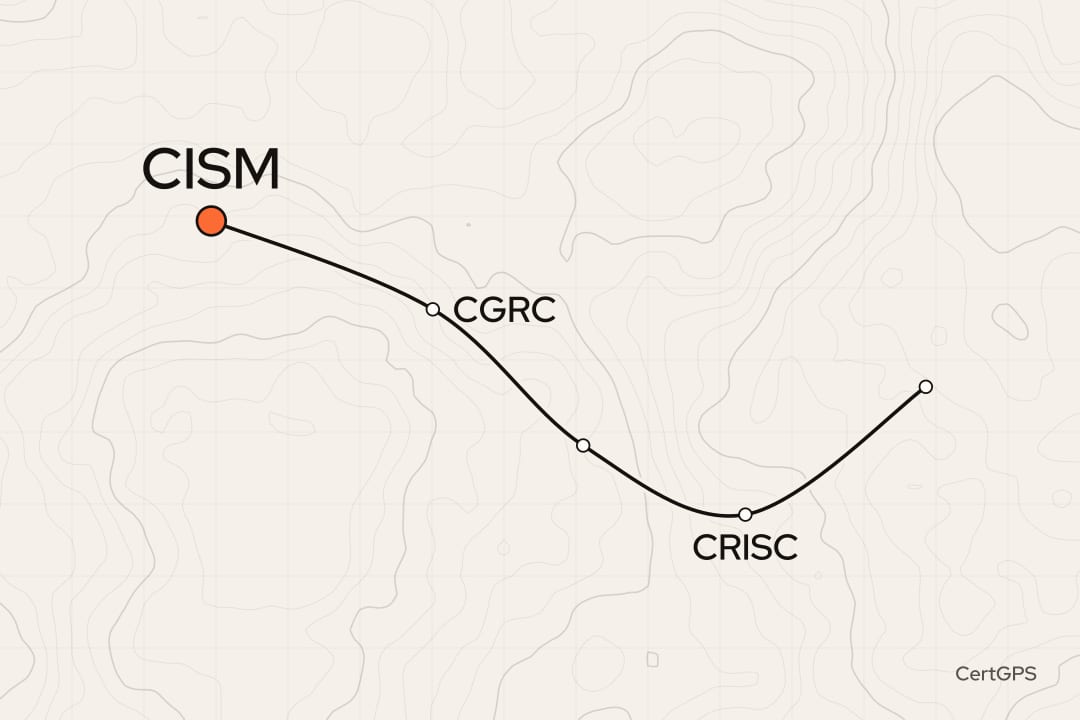
Risk management credentials cover different decisions. CRISC focuses on IT risk assessment and response, CGRC addresses system controls and risk processes, and CISM belongs to security program management. Choose the decision you need to support before selecting the exam. A risk register is only useful when its entries explain what could happen, the evidence behind the assessment and who can act on it.
Begin with a scenario rather than a rating
NIST SP 800-30 provides guidance for conducting risk assessments. Use it to examine how an organization identifies and evaluates threats, vulnerabilities and potential effects. A label such as high risk is a conclusion; a reviewer still needs the scenario and assumptions that support it.
Build a practice scenario around a specific service. Identify what the organization is trying to do, what condition could affect that objective and what consequence matters. Distinguish a vulnerability observed in a test from an estimate of the chance or effect of a future event. Do not fill the gap with invented financial loss values.
Then identify the decision. The owner may need to change a control, accept a defined exposure or obtain more information. If the entry does not lead to a question someone can answer, improve the analysis before choosing another scoring method. This is a recommended exercise, not a mandated format for every risk program.
CRISC fits IT risk assessment and treatment
CRISC is ISACA's credential for IT risk and information systems control work. Its scope is relevant to practitioners who develop risk scenarios, assess them, help choose responses and report on the result. It is not simply a certificate for operating a GRC platform.
Read the experience requirement carefully. ISACA's detailed support page separates candidates by exam date. For the post-November-2025 route, qualifying work must cover both Risk Assessment and Risk Response and Reporting, with no waivers. An older summary about a wider choice of domains should not be applied to a current candidate without checking the exact rule.
Use preparation to revise a real or synthetic risk assessment. Explain the information used, the uncertainty and the owner of the response. If you recommend a metric, state what change in the metric would cause a decision. Avoid a dashboard that becomes busy without becoming more informative.
CGRC fits control-based system risk work
CGRC, formerly CAP, is relevant when risk decisions are supported through system scoping, control selection, implementation, assessment and monitoring. The NIST Risk Management Framework is a useful reference for understanding that lifecycle, while the current ISC2 outline also references other frameworks.
Its full credential requires qualifying professional experience. Read the issuer's application rules before assuming an exam pass is a completed certification. A candidate who needs to gain experience should seek work in the actual responsibilities the issuer recognizes and maintain a record that can be verified later.
Practise assessing a control in context. A failed configuration check may matter differently depending on the system boundary, other protections and the supported activity. Explain the evidence and limits. The decision to accept a system's residual risk belongs to its designated authority, not to whoever happens to hold the credential.
CISM fits the manager who must allocate effort
CISM applies when your work includes the governance and management of a security program. Risk work then informs priorities, resources and accountability across the program. It is a different use of risk knowledge from maintaining an individual system's control package.
The certification includes a management experience rule. Use the current study guide and issuer information to check eligibility and the exam outline applicable to your appointment. Do not treat passing a management knowledge exam as evidence that you have already performed the management work.
A useful preparation exercise is a decision paper. State the risk, proposed response and operational consequence, then identify the owner and the evidence needed to review progress. Where the response competes with another priority, make the tradeoff explicit instead of describing every recommendation as equally urgent.
Audit and enterprise governance are adjacent choices
CISA is relevant when you independently assess controls and report assurance findings. An auditor may evaluate the risk process without owning the risk response. Maintaining that distinction helps avoid claiming both independent assurance and management approval of the same decision without addressing the conflict.
CGEIT concerns enterprise IT governance. It becomes relevant when your responsibility includes how information and technology contribute to enterprise objectives and how outcomes are evaluated. It should not be added simply because it sounds more senior than a risk credential.
ISACA's COBIT is a useful reference for that governance context. Read it to understand the relationship between direction, management and performance, then compare the responsibilities with your role. A framework certificate can structure learning while a professional certification adds separate experience and maintenance requirements.
Compare qualifications using the evidence you need to produce
For each candidate credential, write the task it would help you perform and the evidence you would produce during study. For CRISC, that might be a scenario and response record. For CGRC, a scoped control assessment. For CISM, a program decision that connects security work with an accountable owner.
Check current experience rules, assessment format and ongoing obligations on the issuer's site. A provider's course name does not establish that you will hold the full award after attendance. When a page uses lead, expert or professional, find the actual credential requirements behind the title.
Use the GRC guide for the broader set of responsibilities and the risk career route for staged development. Choose the qualification that helps you improve a decision you can name. If the work still needs better technical evidence, invest there before buying another method for scoring the same uncertain entry.
Sources (9)
- NIST risk assessment: risk assessment method, checked October 2026
- NIST RMF: system risk lifecycle, checked October 2026
- ISACA CRISC: risk certification scope, checked October 2026
- ISACA CRISC experience: date-specific qualification rules, checked October 2026
- ISC2 CGRC: control and system risk credential, checked October 2026
- ISACA CISM: program management credential, checked October 2026
- ISACA CISA: audit credential, checked October 2026
- ISACA CGEIT: enterprise governance credential, checked October 2026
- ISACA COBIT: governance and management reference, checked October 2026