Install an AWS Outposts rack in your own building and AWS makes you responsible for attesting to the physical security and access controls around it. That line sums up much of edge security: cloud-style systems running in places a cloud provider doesn't guard. The catalog credentials that fit this work cover the layer you would secure: containers, cloud, industrial systems or the network. We found no dedicated edge security exam among the major providers reviewed here.
What changes when compute leaves the data center
ETSI's industry group for multi-access edge computing (MEC) published a study on MEC security in March 2024, and its starting point is location. Edge platforms "are often located outside physical security zones typical for data centres", which makes platform integrity a first-order concern. A server in a street cabinet, a factory or a cell site can be opened, unplugged or swapped in a way a server in a hyperscale data center can't.
The usual answer is hardware. The ETSI study describes dedicated cryptographic hardware in MEC hosts acting as a root of trust, with attestation used to prove that the platform booted the software it should have before any workload or secret is sent to it. AWS takes a similar approach with Outposts: customer data is wrapped to a physical Nitro Security Key, the key is removed before the hardware goes back to AWS, and destroying it is equivalent to destroying the data.
Ownership is the second problem. The same ETSI study describes edge deployments as a "multi-vendor, multi-supplier, and multi-stakeholder ecosystem" with no central entity that implements system-wide security or "accepts full liability if things go wrong." That pushes edge designs toward zero trust architecture, where each workload and data flow is verified rather than trusted because of where it sits on the network. It also means a lot of edge security work is contract and responsibility mapping: who patches the host, who owns the cabinet key, who sees the logs.
Scale is the third. Updating one data center is a change window. Updating several thousand edge sites, some on weak links, is a software delivery problem, and a signed, verifiable update pipeline is a security control.
The documents the work draws on
There's no single edge security standard. These are the documents practitioners use:
- ETSI GR MEC 041, Study on MEC Security (V3.1.1, March 2024), on platform integrity, roots of trust, attestation and zero trust for edge platforms
- NIST SP 500-325, Fog Computing Conceptual Model (March 2018), which defines the fog and mist layers between devices and cloud
- NIST SP 800-213 (November 2021), on setting cybersecurity requirements for the IoT devices that edge systems often serve
- ISA/IEC 62443, for edge computing that sits inside an industrial control system
- The EU Cyber Resilience Act, in force since December 10, 2024, which obliges makers of connected products to report actively exploited vulnerabilities from September 11, 2026 and applies its main obligations from December 11, 2027
The Cyber Resilience Act is the one with deadlines. If you work for a company that makes edge hardware or software sold in the EU, its vulnerability-handling and reporting duties are likely to land on the security team.
Credentials by layer
| Layer | What you're securing | Credentials that fit |
|---|---|---|
| Orchestration across many sites | Kubernetes clusters at the edge, including frameworks such as KubeEdge | CKS |
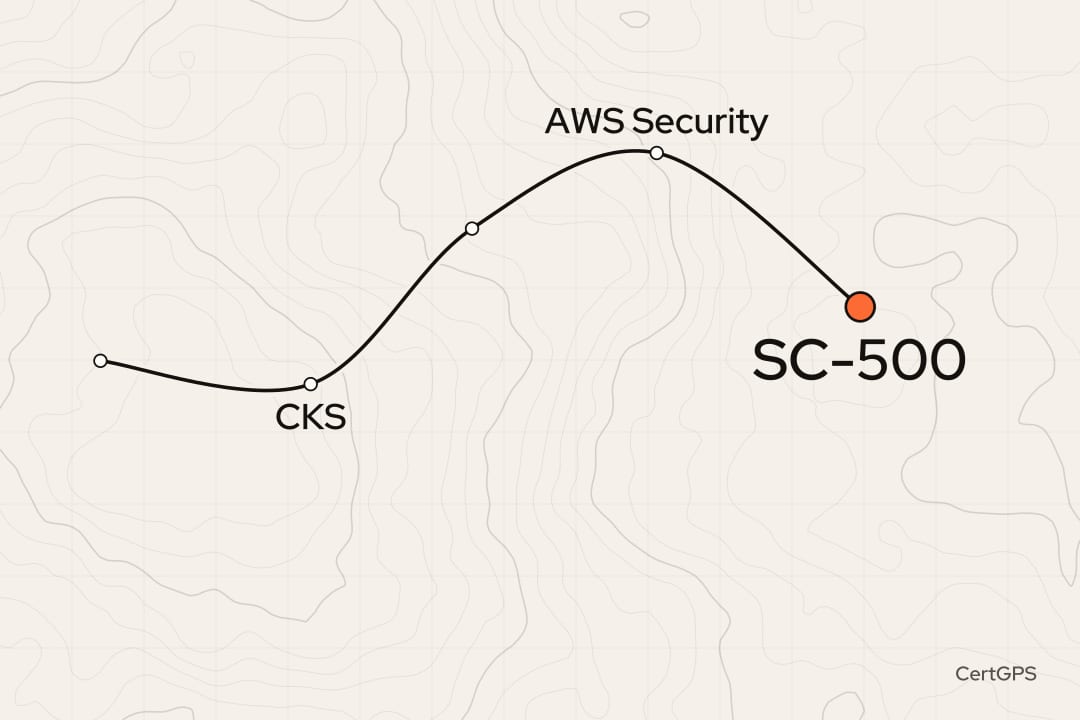
| Cloud provider edge | AWS Outposts and other provider hardware on your premises | AWS Security Specialty, SC-500 |
| Industrial edge | Gateways and edge servers inside plants and utilities | GIAC GICSP, ISA/IEC 62443 certificates |
| Network | Site links, segmentation, remote access | CCNP Security, Network+ |
Kubernetes is one way to run the same workloads across many edge sites. KubeEdge, which describes itself as a Kubernetes-native edge computing framework, graduated from the Cloud Native Computing Foundation on September 11, 2024. CKS is a hands-on exam taken at a live command line, and its supply chain domain (signing and verifying images, restricting registries) maps directly to keeping thousands of sites on known-good software.
For provider hardware on your premises, the provider's own security certification covers the identity, key management and logging around it. AWS Security Specialty is the one for Outposts. Microsoft's replacement for the retired Azure Security Engineer, SC-500, covers Azure.
For industrial sites, GIAC's Global Industrial Cyber Security Professional (GICSP) is an 82-question, three-hour exam with a 71% pass mark, covering control system components, architecture and incident response. ISA's ISA/IEC 62443 certificate program has four certificates, each a course and an exam, and holders of all four are recognized as ISA/IEC 62443 Cybersecurity Experts. ISA says the certificates don't need renewing. Our ICS and SCADA guide compares the two.
Device-level work, such as firmware and the sensors that feed edge nodes, is covered in our IoT security guide.
Who gets hired for it
Who owns edge security depends on what the edge is for. Where it means containers running at hundreds of shops or cell sites, the work sits with platform engineering, and the person hired is a Kubernetes or cloud security engineer who can also reason about a box in an unlocked room. Where it means servers inside plants and substations, the work sits with operational technology, and the person hired knows the plant and can apply 62443 zones and conduits to a new edge server. For either role, check the posting's actual platform and standards requirements before choosing a credential.
Our view
Start from the side you already know. If you come from cloud and containers, take CKS and the cloud security specialty for your provider, then read the ETSI study to learn what physical exposure and remote attestation change. If you come from industrial systems, GICSP or the 62443 certificates fit, and the Kubernetes material is the gap to close. In either case, a lab where you push a signed update to a fleet of small devices and prove what each one booted is better evidence than any course certificate sold under the edge label.
Sources (14)
- AWS Outposts rack FAQs: customer attestation of physical security, Nitro Security Key and crypto-shredding, checked October 2026
- AWS Outposts user guide: Security: shared responsibility model for Outposts, checked October 2026
- ETSI GR MEC 041 V3.1.1: Study on MEC Security (PDF): March 2024 date, physical security zones, roots of trust, attestation, multi-stakeholder liability, zero trust, checked October 2026
- NIST SP 500-325: Fog Computing Conceptual Model: March 2018 date and scope, checked October 2026
- NIST SP 800-213: IoT Device Cybersecurity Guidance for the Federal Government: November 2021 date and scope, checked October 2026
- European Commission: Cyber Resilience Act: December 10, 2024 entry into force, September 11, 2026 reporting obligations, December 11, 2027 main obligations, checked October 2026
- CNCF: KubeEdge: description and September 11, 2024 graduation, checked October 2026
- Linux Foundation: CKS: format and domains, checked October 2026
- AWS Certified Security - Specialty: scope, checked October 2026
- Study guide for Exam SC-500: scope, checked October 2026
- GIAC: GICSP: 82 questions, 3 hours, 71% passing score, scope, checked October 2026
- ISA/IEC 62443 Cybersecurity Certificate Program: four certificates, Expert designation, no renewal, checked October 2026
- Cisco: CCNP Security certification: scope, checked October 2026
- CompTIA Network+: scope, checked October 2026