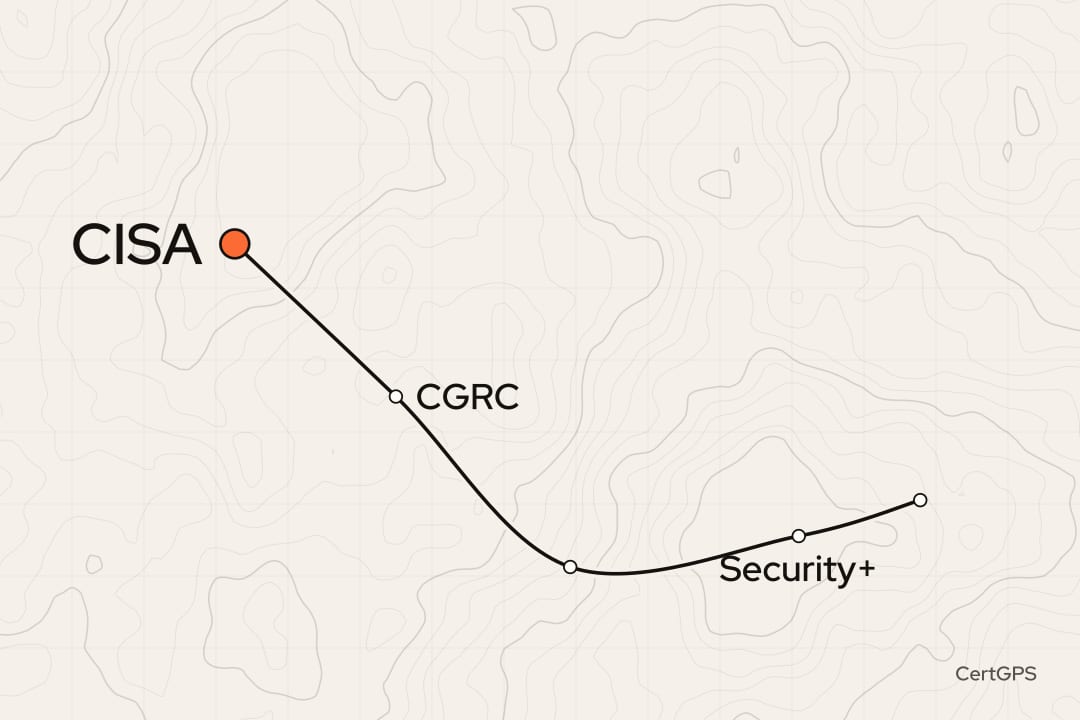
A security compliance officer needs to explain which requirements apply, how the organization meets them and where the evidence falls short. The title does not identify a single exam or a universal regulatory license. Build the route around your employer's obligations and your decision-making responsibility: control coordination, independent assurance and security management call for different experience and credentials.
Learn the requirements before selecting the badge
Start with a defined business activity and the owner who can explain its obligations. A contract, an internal policy and a law can all create requirements, but they have different authorities and consequences. Record the source and scope rather than merging every statement into a generic checklist.
Use a small control register as a learning exercise. For each requirement, identify the system or process in scope, the owner, the intended control and the evidence that would demonstrate it. Add a place for an exception and the person who can approve it. This is a suggested working method, not a substitute for legal interpretation.
The NIST Cybersecurity Framework can help organize security outcomes and communicate gaps. It does not determine every legal or contractual requirement that applies to a company. Where applicability is uncertain, bring a clear question to the appropriate legal, privacy or business owner and record the answer with its scope.
Build enough technical knowledge to challenge evidence
Security+ is a possible foundation for a newcomer who needs to understand common security controls. You should be able to discuss identity, access, network protections and recovery well enough to ask what a screenshot or export actually proves. A document's title alone does not establish its relevance.
Practise reviewing an access-control example with synthetic records. Identify the population, the period covered and the people who approved changes. Then ask whether the evidence demonstrates the control's operation or only its configuration at the moment it was captured. Keep those conclusions separate in your notes.
A technical background helps, but a compliance role also requires clear writing. Replace an unexplained request for proof with a specific question: which accounts were reviewed, against which rule, by whom and with what follow-up? That makes it easier for an operational team to provide useful evidence and for an assessor to reproduce your reasoning.
Use CGRC for structured control work
CGRC, formerly CAP, is ISC2's governance, risk and compliance credential. Its framework-based scope suits a route that includes selecting, assessing and maintaining controls. Compare the current exam outline with your responsibilities rather than assuming the old CAP name restricts it to a single framework.
ISC2 requires qualifying experience for the full certification. Read the experience rules before scheduling the exam, and describe an exam pass accurately if you have not yet completed the certification process. A designation available to an exam passer is not permission to claim a credential they do not hold.
Prepare with an evidence review. Choose a control, define the test and explain the result, including the limits of the sample. Then write a remediation request with an owner and a way to check completion. The GRC specialist track expands on the transition from coordination into risk and assurance work.
Choose CISA when independent assurance is the job
CISA addresses information systems audit and related assurance. It is relevant when you evaluate controls and communicate findings, rather than only gather evidence for someone else's review. ISACA accepts specified professional experience and substitutions under its certification rules; the exam pass is not the full qualification.
Learn how the assessment preserves independence and how findings are supported. A compliance coordinator may help a team assemble evidence while an auditor evaluates that evidence under a separate responsibility. Holding CISA does not erase that difference or automatically authorize you to issue every kind of regulated assurance opinion.
For practice, write a finding that distinguishes the condition observed, the requirement and the effect. Identify any limitation in the evidence and give the owner a fair opportunity to correct factual errors. The purpose is a defensible conclusion, not a longer list of exceptions. See the audit certification guide when comparing assurance routes.
Add management study when you own the program
CISM is a better fit when your responsibilities include security governance, program management and risk decisions. It has a management experience requirement and should not be presented as an entry qualification. Its current exam outline changes in November, so match preparation to the exam date you actually book.
At that stage, practise turning findings into decisions. State the business effect, the proposed treatment, the owner and the evidence needed to confirm improvement. If a risk is accepted, make the approval and its conditions explicit. A certification does not give you authority to accept risk on behalf of a business that has not delegated it.
Privacy-heavy roles may call for IAPP's CIPM for program administration or a jurisdiction-focused CIPP credential. Those are separate study choices, not mandatory additions to every security compliance sequence. Select them because the work demands the corresponding knowledge and verify the current issuer syllabus.
Apply with a traceable example
A useful application includes a requirement, a control description and an evidence-based assessment, using fictional or approved material. Show what you asked the operator, what the evidence supported and what remained open. Avoid publishing a company's audit package simply because you removed its name.
Progress when you can handle a broader decision responsibly. That might mean coordinating a control review, assessing an exception or presenting a remediation plan to its owner. There is no universal number of months at each stage. Choose the credential for the responsibility you are gaining, and keep a record of work that a future certification application can verify.
Sources (8)
- NIST Cybersecurity Framework: outcomes-based security organization, checked October 2026
- CompTIA Security+: technical foundation, checked October 2026
- ISC2 CGRC: governance and control credential, checked October 2026
- ISC2 CGRC experience: full certification experience, checked October 2026
- ISACA CISA: audit and assurance credential, checked October 2026
- ISACA CISM: management credential, checked October 2026
- IAPP CIPM: privacy program management, checked October 2026
- IAPP CIPP: jurisdiction-focused privacy knowledge, checked October 2026