Compliance automation needs people who understand both the control and the evidence collected about it. A platform certification can help implement a workflow, while an assessment or risk credential supports the reasoning behind that workflow. There is no reason to treat the phrase compliance automation as a universal professional qualification. Choose the system you will build or operate and identify what its output can actually prove.
Start with the control before connecting an API
Choose a control and state the question an assessor needs answered. A connector can collect an account list, but the list may not establish whether access was approved or reviewed. Define the population, period and responsible owner before deciding which data to ingest.
Then identify the evidence source and its limits. A current configuration can differ from the configuration that existed when an event occurred. A successful collection job can still omit a system. Record those distinctions in the workflow so a green status does not silently imply a broader conclusion.
For a practice project, use synthetic evidence and write the expected output before building the integration. Include a missing-data case and an incorrect-data case. A useful result distinguishes no evidence from a control that has been tested and failed. This is an engineering recommendation, not a claim that a particular platform implements the distinction automatically.
Use open formats for exchange, not automatic assurance
NIST's Open Security Controls Assessment Language, or OSCAL, provides machine-readable formats for control-related information. It can support exchange between tools and reduce dependence on a document-only workflow. Learning the model is useful when your role involves importing, maintaining or sharing control information.
A file conforming to a schema does not prove that its contents are true. Check where the information came from, who approved it and how it is updated. If a control description is copied from another system, the format cannot establish that the description matches the new system's behavior.
The Security Content Automation Protocol, or SCAP, concerns standardized expression and processing of security configuration and vulnerability information. It supports specific automation use cases. It should not be presented as a professional compliance certificate or a method that evaluates every organizational control.
Choose platform credentials for implementation work
ServiceNow offers the Certified Implementation Specialist in Risk and Compliance. Its published exam blueprint concerns configuring, implementing and maintaining its risk, policy, compliance and audit applications. That is a real platform qualification, with a narrower purpose than certifying general regulatory expertise.
Compare the blueprint with the implementation role you want. Practise the underlying data model and workflow rather than treating navigation through the user interface as the whole job. Identify entities, responsibilities and how a change to a source record affects the evidence or assessment using it.
Check the current prerequisites, delivery rules and maintenance conditions on the issuer's page. A platform award can require ongoing release-related maintenance. Do not assume a course for an older product version supplies the full preparation or current credential requirements. Keep the platform's name in the qualification when describing it to employers.
Add assessment credentials where judgment is the gap
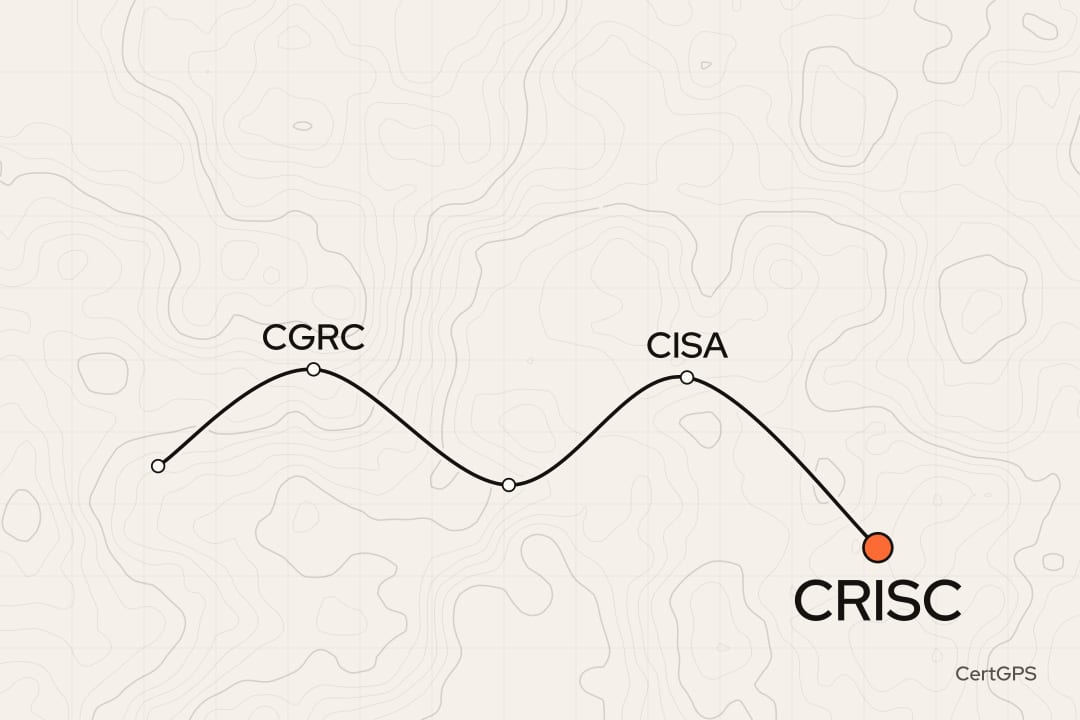
CGRC, formerly CAP, is relevant to system controls and assessment. It can help a practitioner define the question an automated check supports. Its full certification requires qualifying experience, and it does not provide a shortcut around understanding the system under assessment.
CISA supports audit and assurance work. It is useful when you need to examine the reliability of evidence and communicate a conclusion. An automation engineer with CISA still needs to address the applicable engagement responsibilities and independence requirements; the credential alone does not decide those questions.
CRISC fits IT risk assessment, response and reporting. It can help connect automation output with a decision rather than a score nobody acts on. Check ISACA's current experience rules and the category applicable to your exam date before assuming you will qualify immediately after passing.
Test the workflow when the evidence changes
Build a demonstration in which the source system becomes unavailable. Show whether the collector preserves the last known result, marks it as stale or reports an error. The reviewer should be able to distinguish those states. Do not let a successful result remain apparently current after the underlying evidence stops updating.
Next, change the mapping between an automated check and a requirement. Record who approves the mapping and what happens to prior conclusions. A check may support several requirements without proving that the requirements are identical. Keep the original sources and interpretations available for review.
Finally, inspect access to the automation platform itself. Evidence can include sensitive account or system information. Define who can read it, who can change a conclusion and how a reviewer sees the history. Use synthetic records for public examples rather than exporting an employer's actual audit package.
Choose study that improves a defensible result
If the gap is implementation, a platform syllabus and a working integration may help. If the gap is deciding what evidence establishes, an assessment credential may be more relevant. If the gap is data exchange, learn the applicable open format and demonstrate a validated transformation with its limitations.
Avoid invented claims about how much audit time or staffing a certification will save. A vendor's automation claim depends on its scope and environment, and a learning credential does not establish that result for your organization. Evaluate the work through evidence quality and the decisions it supports.
The GRC guide compares professional scopes, while the IT audit guide addresses assurance. A useful automation qualification should help you explain a result, identify missing information and show how a human owner can review the decision. Begin with that outcome before choosing another badge.
Sources (6)
- NIST OSCAL: machine-readable control information, checked October 2026
- NIST SCAP: configuration and vulnerability information automation, checked October 2026
- ServiceNow CIS-RC blueprint: platform implementation qualification, checked October 2026
- ISC2 CGRC: control assessment credential, checked October 2026
- ISACA CISA: audit qualification, checked October 2026
- ISACA CRISC: risk qualification, checked October 2026