An airport's employee directory, an airline's customer application and an aircraft's systems present different security work. An aviation employer may hire specialists for any of them, so start by identifying the system and the engineering process around it. General cybersecurity credentials can support a route into the sector. They do not authorize every kind of aircraft engineering work or replace the employer's safety and assurance procedures.
Read past the aviation label in the vacancy
Find out whether the role supports enterprise IT, a ground or operational environment, product development or aircraft-related engineering. Ask who operates the system, who approves changes and how a proposed security fix is reviewed. Those answers determine which existing skills transfer and which require supervised sector learning.
The FAA's aviation safety workforce material is useful context for understanding the breadth of technical and safety work in the sector. It is not a list of cybersecurity credentials every aviation employer requires. Use the employer's stated duties and requirements to make the certification decision.
NIST's NICE Framework helps translate those duties into security tasks. Infrastructure support, software assessment and cybersecurity architecture can all occur inside an aviation organization. A candidate can make a credible move from an adjacent industry by demonstrating the relevant tasks without pretending that the sector label makes every job identical.
Enter enterprise security through a familiar discipline
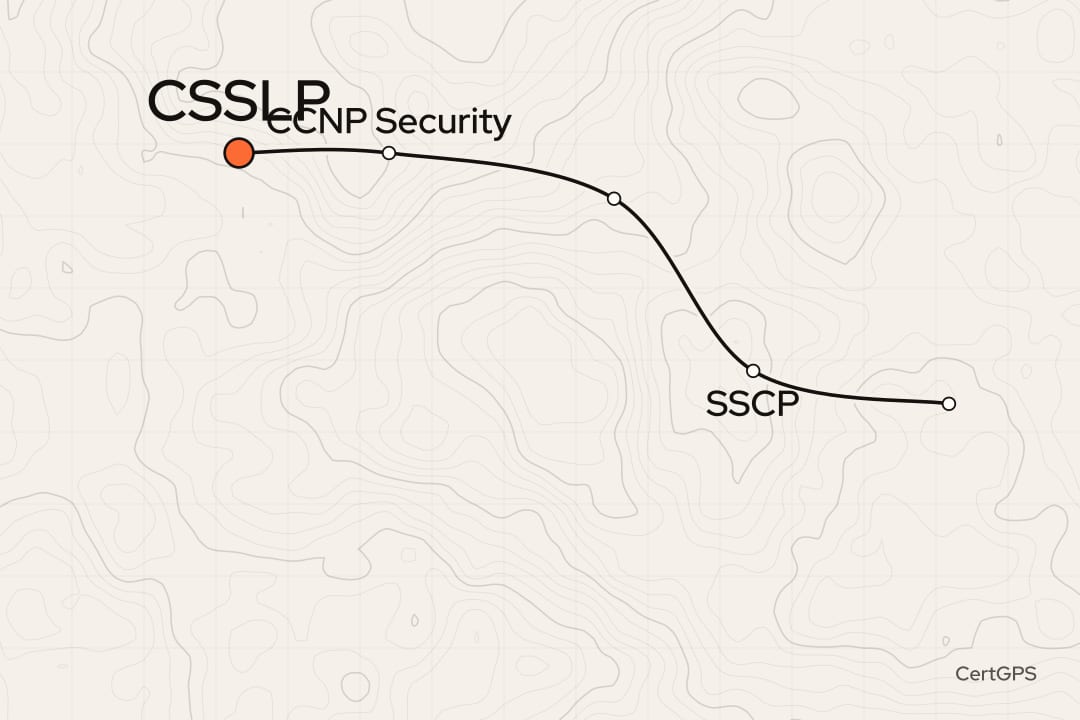
For an administrator or junior engineer, SSCP can support work on access, monitoring, networks and systems. ISC2 requires qualifying experience or an accepted degree pathway. The credential is relevant to operating controls; the employer still decides whether your experience fits its particular environment.
For a network-focused role on Cisco infrastructure, CCNP Security may match the products and engineering work more closely. Cisco's current security program has updated its core and concentration choices, so compare the current objectives with the vacancy rather than following an old exam list.
Build a project that demonstrates the transfer: a reviewed access process, a network design or an investigation with clear evidence. Use an authorized lab and avoid sharing internal diagrams or operational details from an employer. The network-to-security path covers the engineering foundation before the sector-specific move.
Learn the operating constraints before changing the system
Where the role involves operational technology, NIST SP 800-82 Revision 3 is a useful starting point. It discusses systems interacting with physical processes and the performance, reliability and safety requirements that shape their security. Revision 4 is an initial public draft as of October 2026; it has not replaced the final revision.
Ask an experienced operator or engineer to walk you through a normal maintenance change. Find out which evidence is required, what testing happens before deployment and how recovery is handled. A security recommendation that ignores the approved maintenance process may be impossible to implement safely.
For an early assignment, help document an inventory, an access path or a logging dependency under supervision. State where the record is uncertain and who can validate it. The project should demonstrate that you can work within the operating process, not that you can bypass it to apply a familiar IT fix faster.
Take the software branch if the product is the work
CSSLP fits security across software requirements, design, implementation, testing, release and maintenance. ISC2 requires four years of qualifying experience, with a relevant degree able to satisfy up to one year. It can support a developer moving toward security responsibility in an aviation-related product team.
Use NIST's Secure Software Development Framework to organize questions about that team's process. Identify how security requirements enter the design, how findings are reviewed and how changes reach supported versions. The framework is a general software-security reference, so learn the product's own engineering and assurance requirements separately.
A useful practice project follows one requirement through code, a test and a release record. Explain what the evidence establishes and what remains outside the scope. Our product security career route covers this work in greater depth. A general lifecycle credential can support the method without claiming that it certifies the aircraft or its software.
Build a route through supervised responsibility
Choose a first aviation role where your existing specialty is useful and experienced colleagues can review the unfamiliar part. Ask how new staff learn the operating environment and which decisions require additional approval. The quality of that learning arrangement can matter more than an early title with a broad security remit.
Keep a record of responsibilities rather than only courses completed. A design review, a tested control or an accurately scoped assessment gives you material to discuss without relying on unsupported claims of aviation expertise. Describe the review process and what you changed after feedback.
If your work broadens into architecture and governance, CISSP may become relevant. ISC2 normally requires five years across at least two domains, with a maximum one-year waiver. It gives a broad security qualification; it does not remove the need for the sector's specific engineering responsibilities and approvals.
Evaluate the next credential against the next assignment
Before buying specialized aviation training, confirm the issuer, current course availability, assessment and intended audience. Distinguish a course-completion certificate from a personnel certification or a program required by the employer. Avoid a roadmap that invents a universal aviation cybersecurity credential and treats it as a license to work on every system.
Ask the prospective manager what successful work in the first assignment would look like. For an enterprise role it may be a reliable identity-control process. For a software role it may be a reviewed security requirement and test. For an operational environment it may be accurate evidence that supports an approved change.
We would enter through a discipline you can already demonstrate, learn the aviation process with qualified reviewers and add training where the assignment exposes a specific gap. The critical infrastructure path covers the OT distinction, while the architecture route explains how reviewed design work can become a longer-term specialization.
Sources (8)
- FAA aviation safety workforce plan: sector workforce context, checked October 2026
- NICE Framework resource center: task-based security roles, checked October 2026
- NIST OT security Revision 3: operating constraints and draft status, checked October 2026
- NIST SSDF: software lifecycle practices, checked October 2026
- ISC2 SSCP experience: credential eligibility, checked October 2026
- Cisco security program update: current security exam program, checked October 2026
- ISC2 CSSLP experience: software experience rule, checked October 2026
- ISC2 CISSP experience: breadth credential eligibility, checked October 2026