A car manufacturer's identity platform and a vehicle's firmware need different security skills. Decide which system you want to protect before buying a certification: enterprise IT follows a familiar security route, while vehicle engineering adds embedded software, hardware interfaces and evidence across the product lifecycle. A general credential can support either route, but it does not establish that you can assess a vehicle design.
Choose the system you want to work on
Automotive companies operate business applications, manufacturing equipment, connected services and vehicles. These systems interact, but their owners and constraints differ. A cloud account incident calls for different evidence from a weakness in an electronic control unit. Read the responsibilities in a vacancy before treating its automotive label as a specialization.
For enterprise work, the NICE Workforce Framework's roles provide a useful starting vocabulary for architecture, defensive operations and incident response. Match the tasks to work you already do. An administrator who manages identities may have a shorter route into the manufacturer's enterprise security team than into firmware analysis.
For vehicle engineering, learn how a feature is specified, developed, tested, supplied and maintained. Ask where security decisions enter that process. You should be able to distinguish an engineering requirement from the test intended to demonstrate it, and identify who accepts a residual risk when the requirement cannot be met.
Learn the vehicle lifecycle before choosing a course
ISO identifies ISO/SAE 21434:2021 as a cybersecurity engineering standard for road vehicle electrical and electronic systems across their lifecycle. It addresses risk management through development and operation rather than prescribing a particular protection product. ISO's page still lists that edition as published, with a revision under development. A revision project does not make the existing publication disappear.
Use the standard's scope to judge a training offer. A course that only demonstrates attacks on a bus may teach useful techniques, but it leaves other engineering responsibilities uncovered. Ask about risk analysis, requirements, verification evidence and coordination between a vehicle manufacturer and its suppliers. Compare the syllabus with the work you want to perform.
Keep functional safety and cybersecurity distinct while learning their interaction. A security assessment can affect assumptions used by safety engineering, but passing a security exam does not qualify you to sign off every safety decision. In interviews, explain how you would bring the relevant engineering owner into a decision instead of presenting yourself as the sole authority.
Build a technical foundation you can explain
Start with networking, operating systems, basic programming and the limits of the devices you intend to test. For an embedded route, practise reading source code and understanding how a program handles input, privilege and updates. Use equipment you own or a lab whose rules authorize the work. Testing a connected vehicle without permission is not a portfolio exercise.
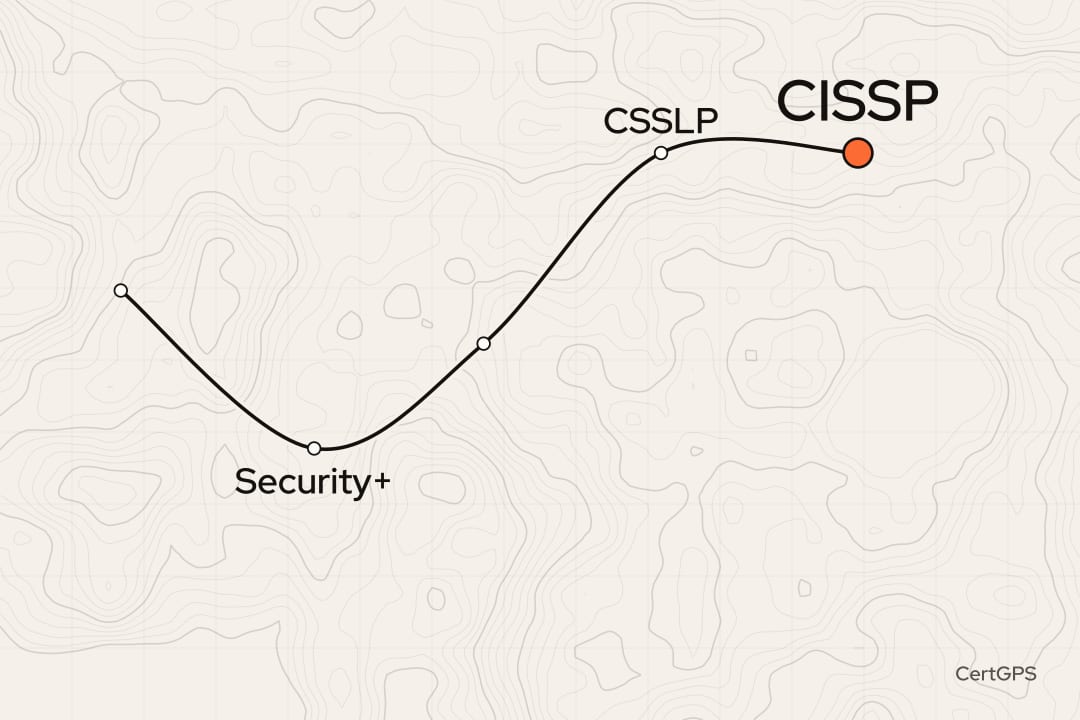
Security+ can help an IT practitioner organize security fundamentals. It is not an automotive engineering qualification. If you already apply those fundamentals at work, spend the next study budget on the vehicle technology or engineering process missing from your experience rather than repeating a foundation exam for its title.
Create a small demonstrator with a clear boundary: an update verifier, a simulated diagnostic interface or a service that exchanges vehicle data. Describe the attacker assumptions and expected protections. A reader should be able to reproduce the test without access to a production vehicle or any customer information.
Use software credentials for software responsibilities
CSSLP is relevant when you help build secure software across its lifecycle. Its coverage makes it a more direct fit for requirements, implementation and verification work than a credential chosen only because its title includes hacking. ISC2 requires qualifying professional experience for the full certification; check the current rules before planning an application.
Study for the credential alongside an engineering artifact. For a software update feature, document how authenticity is checked, how failed verification is handled and how the design limits access to signing material. Trace each requirement to a test and record what the test cannot establish. This is editorial advice for demonstrating work, not a claim that one exercise meets a manufacturer's approval process.
Practical offensive training can follow when your job involves authorized assessment. Select it for the code, architecture or testing method you will use. A general penetration test exam may provide a useful method while leaving vehicle protocols and physical access assumptions to separate study.
Make the portfolio useful to an engineering reviewer
A report should explain the affected component, the conditions required for the weakness and the consequences within the stated system. Separate an observed result from a possible wider effect. Showing that a test device accepts an unexpected message does not, by itself, prove what a production vehicle would do with that message.
Include the proposed correction and a repeatable check after the correction. If the protection creates a recovery or maintenance problem, document that tradeoff. A reviewer needs to see that you can help a team release and maintain a product, not merely produce a surprising demonstration.
Use the application security transition for a software-focused route and the supply chain security guide for supplier assessment. Keep confidential designs out of public samples. A synthetic example with a precise explanation is more useful than a real diagram you had no permission to publish.
Add breadth when the responsibility expands
CISSP becomes relevant when you coordinate security across systems and engineering teams. Its experience requirement means it belongs in a plan for established practitioners. It does not replace vehicle-specific engineering knowledge, and a CISSP exam pass alone does not permit claiming the full credential.
For your next application, choose a role narrow enough to demonstrate. Bring one example of a requirement, the analysis behind it and the evidence that supports its implementation. If you can discuss who owns the unresolved decisions and how updates change the risk, you have a stronger basis for a vehicle security conversation than a list of unrelated badges.
Sources (5)
- ISO/SAE 21434: vehicle cybersecurity engineering scope and publication status, checked October 2026
- NICE Framework: task and work-role planning, checked October 2026
- CompTIA Security+: general security foundation, checked October 2026
- ISC2 CSSLP: secure software lifecycle credential, checked October 2026
- ISC2 CISSP experience: full credential experience requirement, checked October 2026